




Why Is My Fiber Cement Board Crumbling At Edges?
Fiber cement board edges usually crumble because of stress concentration, poor support, moisture exposure, improper cutting, or long-term material fatigue. Most edge failures are linked to installation and environmental conditions rather than simple manufacturing defects.
TRUSUS durability insight: edge damage is often a system problem involving structure, moisture, temperature, and installation together.

Many users assume edge crumbling means the board itself is weak.
But after years in fiber cement manufacturing, I have seen that edge zones experience the highest stress in real building conditions.
Common Causes Of Edge Crumbling
| Cause | Effect |
|---|---|
| Insufficient edge support | Stress concentration |
| Moisture cycling | Expansion and shrinkage |
| Poor cutting methods | Microcrack formation |
| Fasteners too close to edge | Localized fracture |
| Thermal movement | Long-term fatigue |
Edges behave differently from the center of the panel.
They dry faster, cool faster, and carry uneven loading.
Environmental Stress Factors
| Condition | Impact On Board Edge |
|---|---|
| Freeze-thaw cycles | Crack expansion |
| Water intrusion | Cement weakening |
| UV exposure | Surface aging |
| Structural vibration | Fatigue cracking |
In many projects, I notice installers focus mainly on board strength ratings.
But the support system matters just as much.
Prevention Methods
| Prevention Method | Benefit |
|---|---|
| Proper framing spacing | Reduces flexing |
| Edge reinforcement | Improves durability |
| Sealed joints | Blocks moisture |
| Correct screw placement | Prevents fracture |
| Clean cutting tools | Reduces microdamage |
Modern high-performance systems increasingly use reinforced edge engineering to reduce stress concentration.
The industry is moving from “board-only thinking” toward “whole-system durability thinking.”
What Causes Soft Spots In Old Fiber Cement Board?
Soft spots in old fiber cement board are usually caused by moisture penetration, incomplete hydration, freeze-thaw damage, chemical attack, or internal material breakdown over time. They often indicate long-term structural deterioration inside the board.
TRUSUS aging insight: soft spots are usually the visible result of microscopic deterioration that developed slowly over many years.
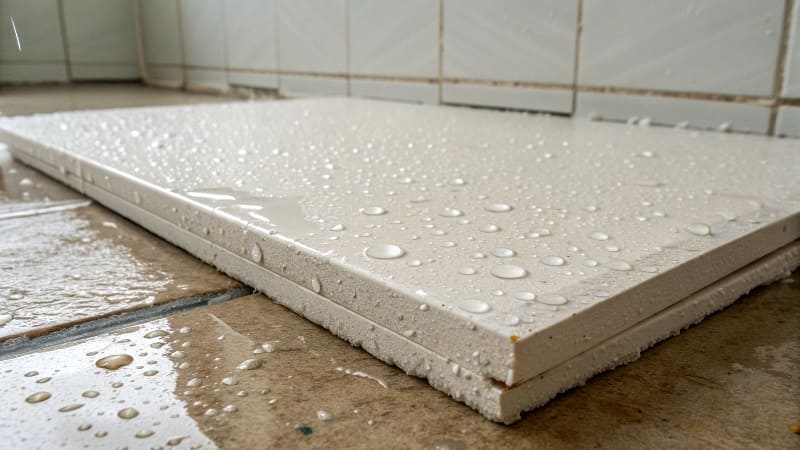
Soft areas rarely appear suddenly.
They normally develop through multiple stages of material degradation.
Early-Stage Weakness Formation
| Initial Problem | Long-Term Risk |
|---|---|
| High local water content | Weak hydration zones |
| Air pockets | Internal voids |
| Uneven curing | Incomplete cement bonding |
| Poor mixing consistency | Density variation |
As the board ages, environmental exposure accelerates the problem.
Progressive Deterioration Mechanisms
| Mechanism | Result |
|---|---|
| Freeze-thaw cycling | Crack growth |
| Carbonation | Cement chemistry changes |
| Salt exposure | Mineral breakdown |
| Moisture absorption | Internal softening |
Over time, these processes increase porosity inside the board.
That creates localized soft spots.
Signs Of Developing Soft Areas
| Symptom | Possible Condition |
|---|---|
| Surface depression | Internal breakdown |
| Discoloration | Moisture retention |
| Reduced hardness | Cement weakening |
| Hollow sound | Internal separation |
In older buildings, repeated wetting and drying cycles are often the main driver.
Prevention Strategies
| Strategy | Purpose |
|---|---|
| Dense board formulation | Lower water absorption |
| Surface sealing | Moisture protection |
| Proper ventilation | Faster drying |
| Quality curing process | Complete hydration |
I often explain that durability is heavily influenced by microscopic structure.
Small manufacturing inconsistencies can become major performance issues years later.
That is why long-term durability engineering is becoming more important than simple strength testing.
How Do You Prevent Efflorescence On Fiber Cement Siding?
Efflorescence on fiber cement siding can be reduced by controlling moisture movement, using low-alkali materials, improving drainage, and applying breathable protective coatings. The main goal is limiting water transport through the cement matrix.
TRUSUS chemical insight: efflorescence is not just a surface stain. It is a moisture migration problem inside the entire wall system.
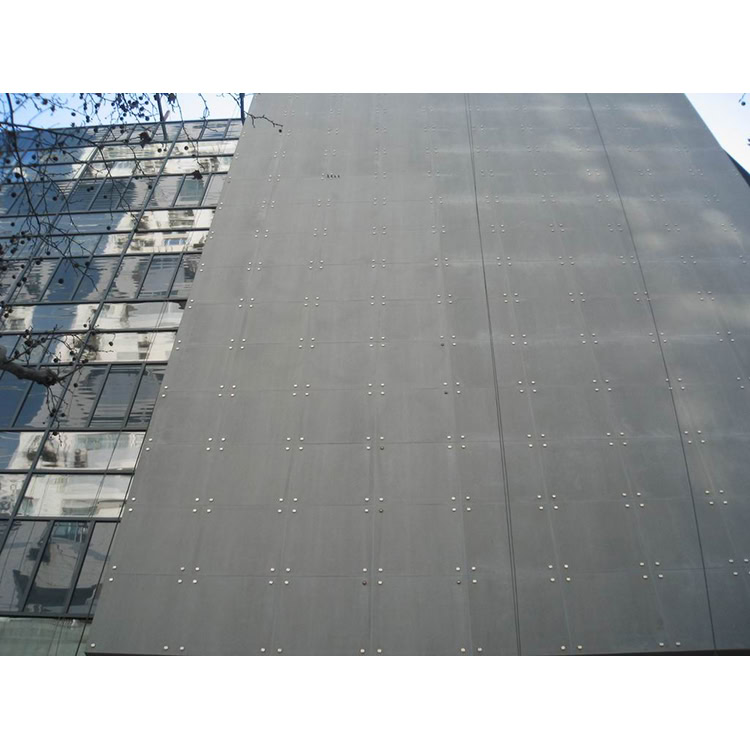
Efflorescence appears as white powdery deposits on the board surface.
It forms when dissolved mineral salts move with water toward the exterior surface.
Basic Efflorescence Process
| Stage | Description |
|---|---|
| Water enters board | Moisture dissolves salts |
| Moisture migrates outward | Salts travel through pores |
| Water evaporates | Salts remain on surface |
| Crystal deposits form | White residue appears |
The issue is closely tied to moisture management.
Main Risk Factors
| Risk Factor | Effect |
|---|---|
| Poor drainage | Increases water exposure |
| High humidity | Supports salt migration |
| Low ventilation | Slower drying |
| High cement alkalinity | More soluble salts |
I often see projects where the siding itself performs well, but poor wall design creates constant moisture accumulation.
Prevention Methods
| Method | Benefit |
|---|---|
| Ventilated rainscreen design | Faster drying |
| Proper flashing installation | Water control |
| Breathable coatings | Moisture escape |
| Sealed joints | Reduced infiltration |
| Low-alkali cement systems | Fewer soluble salts |
Surface coatings must balance two functions:
- Water resistance
- Vapor permeability
If moisture becomes trapped behind the coating, efflorescence may worsen.
Long-Term Control Measures
| Measure | Result |
|---|---|
| Routine cleaning | Prevents buildup |
| Drainage inspection | Limits water entry |
| Surface maintenance | Extends protection |
| Humidity management | Stabilizes moisture levels |
Efflorescence prevention is most successful when design, manufacturing, installation, and maintenance all work together.
How To Detect Internal Rot In Cement Board Sheets?
Internal deterioration in cement board sheets can be detected using visual inspection, tapping tests, moisture measurements, thermal imaging, ultrasonic testing, and core sampling when necessary. Modern detection methods allow earlier diagnosis before severe structural failure appears.
TRUSUS diagnostic insight: hidden deterioration often develops long before visible surface damage becomes obvious.
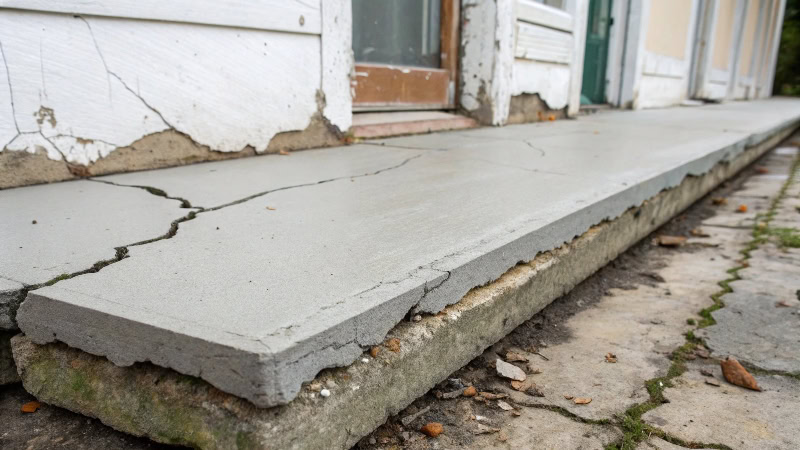
Traditional inspection methods rely heavily on surface appearance.
But internal degradation may exist even when the exterior still looks acceptable.
Early Warning Signs
| Sign | Possible Internal Issue |
|---|---|
| Surface bulging | Internal separation |
| Soft zones | Moisture damage |
| Hollow tapping sound | Delamination |
| Persistent staining | Water intrusion |
Simple tapping tests are often useful for preliminary inspection.
A hollow sound may indicate internal voids or separation.
Advanced Detection Technologies
| Technology | Detection Ability |
|---|---|
| Thermal imaging | Moisture and density variation |
| Ultrasonic testing | Cracks and voids |
| Moisture meters | Water concentration |
| Electrical resistivity testing | Internal degradation level |
| Core sampling | Full material analysis |
Thermal imaging has become especially valuable because it can quickly scan large wall areas without damaging the surface.
Advantages Of Modern Inspection
| Benefit | Result |
|---|---|
| Non-destructive testing | Minimal building damage |
| Early diagnosis | Lower repair cost |
| Quantitative data | Better maintenance planning |
| Lifecycle monitoring | Predictive maintenance |
In my experience, regular inspection programs are becoming increasingly important for older building envelopes.
Suggested Condition Rating Approach
| Condition Level | Recommended Action |
|---|---|
| Minor deterioration | Monitoring |
| Moderate deterioration | Repair and sealing |
| Advanced deterioration | Structural reinforcement |
| Severe failure | Full replacement |
The future of fiber cement maintenance is moving toward predictive performance management instead of reactive repair.
Manufacturers are no longer responsible only for producing boards.
We are increasingly expected to support long-term building performance throughout the product lifecycle.
Conclusion
At TRUSUS, I see fiber cement aging problems not as isolated material defects, but as the result of long-term interaction between design, environment, installation, and maintenance. The future of the industry depends on delivering predictable lifecycle performance, not just initial product quality.
