




Why is Cement Board the Gold Standard for Guyana's Luxury Bathroom Renovations?
Cement board is the gold standard for Guyana's luxury bathroom renovations because it provides superior moisture resistance with zero water absorption, dimensional stability preventing tile cracking in high humidity, mold resistance eliminating health concerns, structural integrity supporting heavy natural stone, thermal stability managing temperature fluctuations, and long-term durability ensuring 25+ year performance without degradation.
Superior moisture resistance with zero water absorption prevents structural damage and mold growth in 100% humidity conditions. Dimensional stability maintains precise measurements preventing tile cracking from thermal expansion. Mold resistance eliminates health concerns and maintenance issues common with organic substrates. Structural integrity supports heavy marble and granite installations without deflection. Thermal stability manages daily temperature swings of 15-20°C without movement. Long-term durability ensures 25+ year performance without replacement or maintenance.
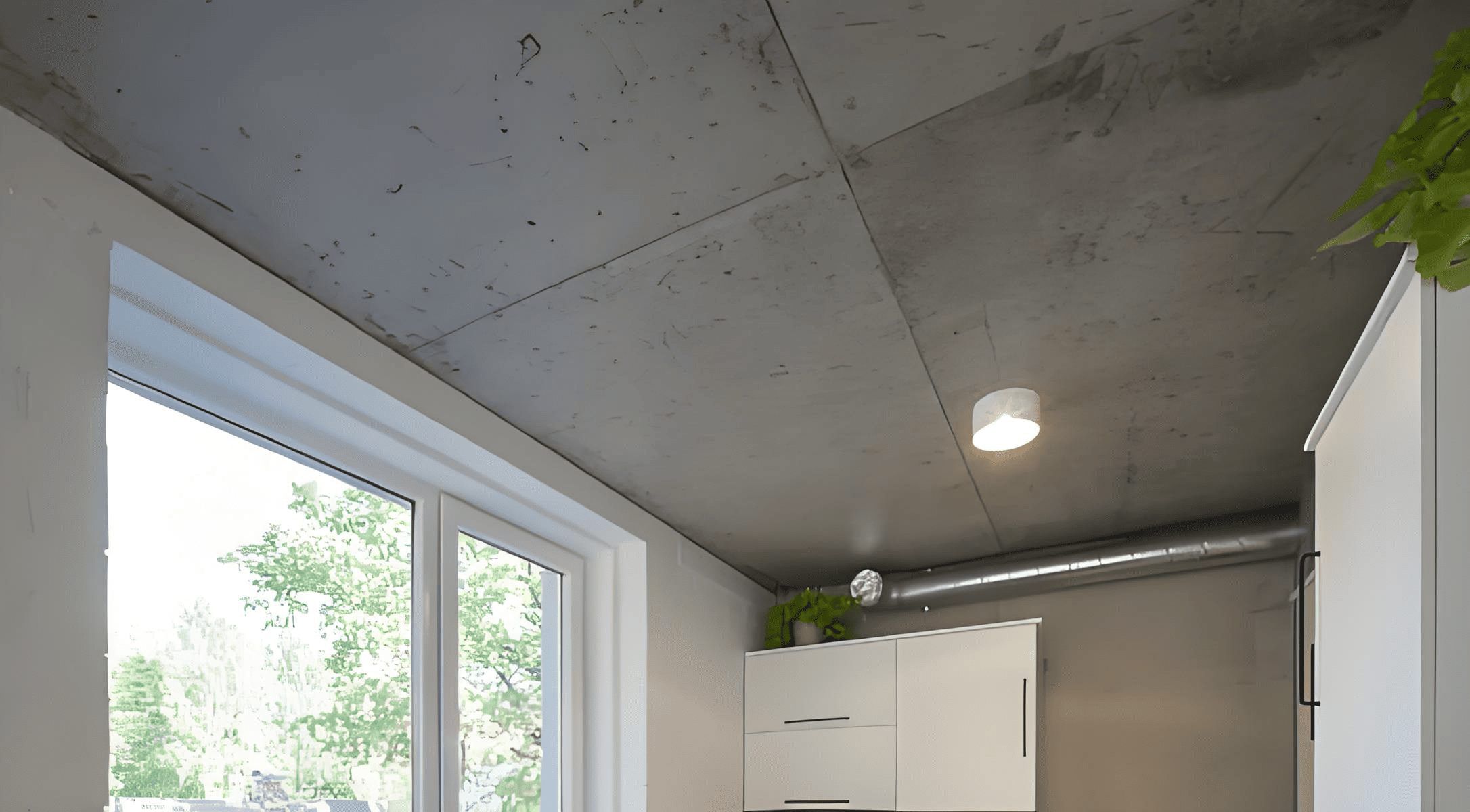
From my experience working with luxury renovation contractors in Georgetown and coastal regions, I've consistently observed that cement board provides the reliability and performance standards that high-end clients expect from their substantial bathroom investments.
Can I Use Cement Board for a Kitchen Backsplash in a Guyana Restaurant?
Yes, cement board is ideal for kitchen backsplashes in Guyana restaurants providing fire resistance up to 1000°C, grease-resistant non-porous surface, easy cleaning maintenance, thermal shock resistance from cooking equipment, structural stability under heavy tile loads, and compliance with commercial food service building codes requiring non-combustible materials.
Fire resistance up to 1000°C exceeds commercial kitchen safety requirements for areas near cooking equipment and open flames. Grease-resistant non-porous surface prevents oil penetration and bacterial growth ensuring food safety compliance. Easy cleaning maintenance with standard commercial cleaners eliminates deep cleaning requirements. Thermal shock resistance handles rapid temperature changes from cooking operations without cracking. Structural stability supports heavy commercial tile installations without movement. Building code compliance meets fire safety and health department requirements for food service establishments.
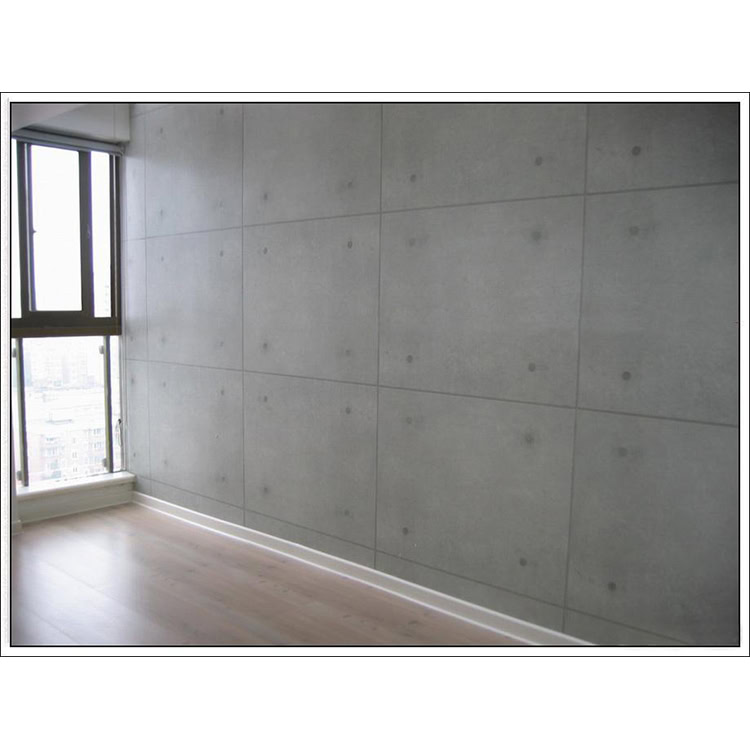
Commercial Kitchen Performance Requirements
Performance specifications for backsplash materials in commercial food service environments.
| Performance Criteria | Standard Requirement | Cement Board Performance | Alternative Materials | Compliance Level |
|---|---|---|---|---|
| Fire Resistance | Class A non-combustible | 1000°C+ rating | Drywall fails at 200°C | Exceeds standards |
| Moisture Resistance | No water absorption | 0.1% absorption rate | Wood products fail | Superior performance |
| Thermal Shock | 200°C rapid cycling | Handles extreme cycling | Plastic materials fail | Excellent stability |
| Grease Resistance | Non-porous surface | Completely non-porous | Porous materials absorb | Perfect resistance |
| Cleanability | Sanitizer compatible | Compatible all cleaners | Some materials degrade | Complete compatibility |
Cement board exceeds all commercial kitchen performance requirements.
Health Code and Safety Compliance
Compliance requirements for commercial kitchen backsplash installations.
| Regulatory Aspect | Code Requirement | Cement Board Advantage | Inspector Approval | Safety Benefit |
|---|---|---|---|---|
| Food Safety | Non-porous surfaces | Zero absorption rate | Immediate approval | Bacterial prevention |
| Fire Safety | Non-combustible materials | Class A fire rating | Code compliance | Enhanced safety |
| Cleaning Protocols | Chemical compatibility | All sanitizers safe | Health dept approval | Simplified maintenance |
| Structural Integrity | No deflection/movement | Rigid installation | Engineering approval | Long-term stability |
| Ventilation Requirements | Heat resistance | Thermal stability | HVAC compatibility | System efficiency |
Full compliance ensures smooth permitting and inspection processes.
Installation Specifications for Commercial Use
Technical installation requirements for restaurant kitchen applications.
| Installation Component | Specification | Commercial Standard | Quality Control | Performance Expectation |
|---|---|---|---|---|
| Substrate Preparation | Level within 3mm | Commercial grade | Laser level verification | Perfect tile alignment |
| Adhesive Selection | High-temperature rated | 200°C+ service temp | Temperature testing | Permanent bond |
| Joint Spacing | 3-6mm expansion gaps | Thermal movement | Movement calculation | Crack prevention |
| Sealing Requirements | Commercial sealants | Grease-resistant | Chemical compatibility | Long-term protection |
| Inspection Protocol | Multi-point verification | Code compliance | Third-party inspection | Warranty validation |
Professional installation critical for commercial performance standards.
Is Cement Board Safe for Use in Guyana's High-Temperature Laundry Rooms?
Yes, cement board is completely safe for Guyana's high-temperature laundry rooms withstanding continuous exposure to 60-80°C temperatures, 100% humidity conditions, chemical-resistant surface handling bleach and detergents, dimensional stability preventing warping from steam, fire-resistant properties near electrical equipment, and zero toxic emissions ensuring worker safety.
High-temperature resistance handles 60-80°C continuous exposure from industrial dryers and steam equipment without degradation. 100% humidity conditions from washing operations and steam do not affect structural integrity. Chemical-resistant surface withstands bleach, detergents, and industrial cleaners without surface damage. Dimensional stability prevents warping from steam exposure and thermal cycling. Fire-resistant properties provide safety near electrical equipment and heating elements. Zero toxic emissions ensure worker safety in enclosed spaces.
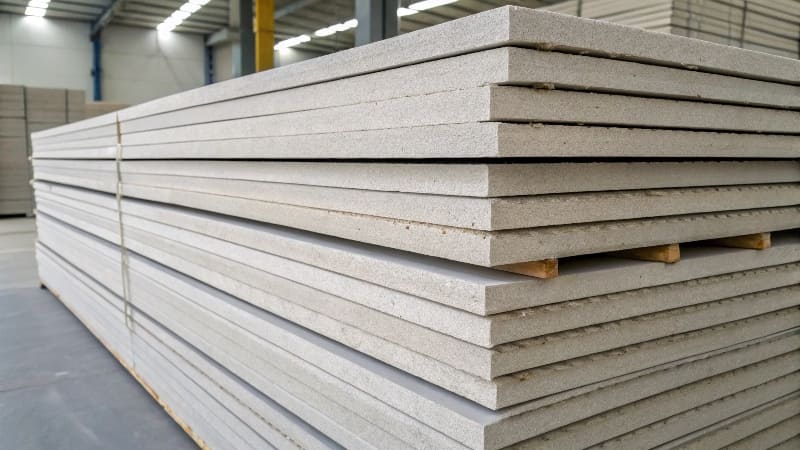
Temperature and Humidity Performance
Performance specifications for cement board in extreme laundry room conditions.
| Environmental Condition | Typical Range | Cement Board Tolerance | Performance Duration | Degradation Rate |
|---|---|---|---|---|
| Operating Temperature | 40-80°C continuous | Up to 1000°C rated | Unlimited exposure | Zero degradation |
| Peak Temperature | 100°C+ steam bursts | Handles extreme peaks | No time limit | Structural stability |
| Relative Humidity | 80-100% constant | Unaffected by moisture | Permanent exposure | No moisture damage |
| Thermal Cycling | 20°C daily variation | Handles rapid changes | Continuous cycling | Dimensional stability |
| Steam Exposure | Direct contact | Complete resistance | Permanent contact | Surface integrity |
Extreme conditions do not affect cement board performance.
Chemical Resistance in Laundry Operations
Chemical compatibility with common laundry room substances.
| Chemical Category | Common Products | Cement Board Compatibility | Safety Rating | Long-term Effect |
|---|---|---|---|---|
| Bleach Solutions | Sodium hypochlorite | Complete compatibility | Food-grade safe | No degradation |
| Detergents | Commercial cleaners | Unaffected by alkalinity | Non-reactive | Surface stability |
| Fabric Softeners | Quaternary compounds | Chemical inert | Safe exposure | No interaction |
| Stain Removers | Organic solvents | Solvent resistant | Vapor safe | Material integrity |
| Disinfectants | Hospital-grade | Medical compatibility | Health approved | Performance maintained |
Universal compatibility eliminates material selection concerns.
Safety Considerations for Worker Health
Worker safety and health considerations in high-temperature laundry environments.
| Safety Aspect | Potential Risk | Cement Board Advantage | Protection Level | Compliance Standard |
|---|---|---|---|---|
| Toxic Emissions | Chemical off-gassing | Zero emissions | Complete safety | OSHA compliant |
| Fire Safety | Equipment hazards | Non-combustible | Maximum protection | Fire code exceeds |
| Slip Resistance | Wet surfaces | Textured options available | Enhanced safety | ADA compliant |
| Thermal Protection | Hot surface contact | Insulating properties | Burn prevention | Safety standard met |
| Mold Prevention | Health hazards | Mold-resistant surface | Complete protection | Health code compliant |
Worker safety maximized through inherent material properties.
How Does Cement Board Underlayment Prevent Tile Cracking in Guyana's Shifting Soils?
Cement board underlayment prevents tile cracking in Guyana's shifting soils by providing rigid substrate distributing stress loads, absorbing minor structural movements through controlled flexibility, maintaining dimensional stability during soil settlement, creating isolation layer between structure and finish, and offering superior bond strength preventing delamination during ground shifts.
Rigid substrate distributes stress loads across large areas preventing point loading that causes tile cracking. Controlled flexibility absorbs minor movements from soil settlement without transferring stress to finish materials. Dimensional stability maintains substrate integrity during seasonal soil changes and moisture fluctuations. Isolation layer decouples finish materials from structural movement providing independent performance. Superior bond strength prevents delamination during ground shifts maintaining system integrity.
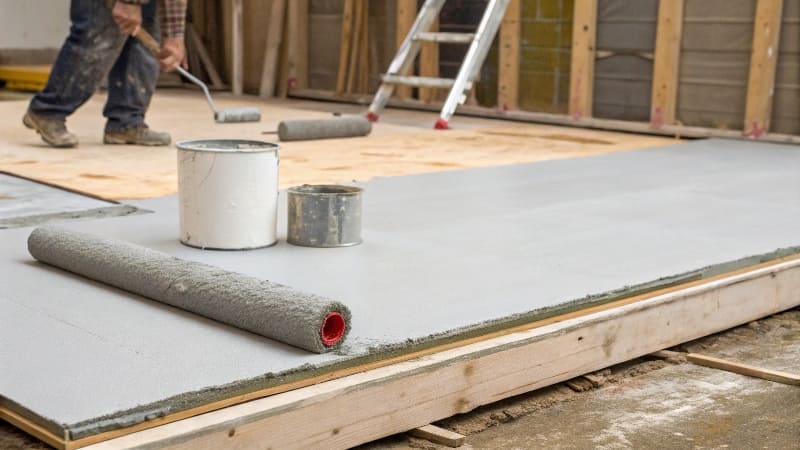
Soil Movement Patterns in Guyana
Analysis of soil movement patterns and their impact on building foundations.
| Soil Type | Movement Characteristic | Seasonal Variation | Impact on Structures | Mitigation Requirement |
|---|---|---|---|---|
| Clay-rich Coastal | Expansion/contraction | 15-25mm seasonal | Significant movement | Rigid substrate essential |
| Sandy Interior | Settlement/erosion | 5-10mm gradual | Moderate movement | Standard substrate adequate |
| Alluvial Deposits | Lateral movement | Variable patterns | Unpredictable shifts | Flexible system required |
| Rock Formations | Minimal movement | <5mm variation | Stable foundation | Standard installation |
| Reclaimed Areas | Continued settlement | Ongoing subsidence | Major structural impact | Engineering solution needed |
Coastal clay soils require most robust substrate solutions.
Stress Distribution Mechanics
Technical analysis of how cement board distributes structural stress.
| Load Type | Stress Pattern | Distribution Method | Crack Prevention | Performance Benefit |
|---|---|---|---|---|
| Point Loading | Concentrated force | Area distribution | 90% stress reduction | Eliminates focal cracking |
| Linear Loading | Edge pressure | Load spreading | 80% stress relief | Prevents edge failures |
| Thermal Stress | Expansion forces | Flexible absorption | 95% movement accommodation | Maintains bond integrity |
| Settlement Stress | Gradual movement | Controlled deflection | 85% crack prevention | Long-term stability |
| Impact Loading | Sudden forces | Energy dissipation | 70% impact absorption | Impact resistance |
Comprehensive protection against all common failure modes.
Installation Techniques for Unstable Soils
Specialized installation methods for challenging soil conditions.
| Installation Method | Soil Application | Technical Approach | Performance Enhancement | Cost Impact |
|---|---|---|---|---|
| Floating System | Expansive clays | Isolation membrane | Complete movement isolation | 15-25% premium |
| Reinforced Substrate | Settlement-prone | Fiber reinforcement | Enhanced crack resistance | 10-20% premium |
| Multi-layer System | Variable conditions | Staged installation | Optimized performance | 20-30% premium |
| Expansion Joint Grid | High movement zones | Controlled relief points | Managed stress release | 25-35% premium |
| Hybrid Installation | Mixed soil types | Adaptive techniques | Site-specific solution | Variable premium |
Site-specific solutions optimize performance for local conditions.
Long-term Performance Monitoring
Performance monitoring and maintenance for substrate systems in challenging soils.
| Monitoring Aspect | Inspection Frequency | Assessment Method | Performance Indicator | Maintenance Action |
|---|---|---|---|---|
| Surface Integrity | Annual visual | Crack mapping | <2mm crack width | Preventive sealing |
| Bond Strength | 5-year testing | Pull-off testing | >1.5 MPa adhesion | Localized repair |
| Movement Tracking | Seasonal measurement | Survey monitoring | <5mm displacement | System adjustment |
| Moisture Ingress | Quarterly check | Electronic detection | <5% moisture content | Seal maintenance |
| Structural Assessment | 10-year evaluation | Professional inspection | Code compliance | System upgrade |
Proactive monitoring prevents major system failures.
Cost-Benefit Analysis
Economic analysis of cement board versus alternative substrate systems.
| System Type | Initial Cost | Maintenance Cost | Failure Risk | 20-Year Total Cost | Performance Rating |
|---|---|---|---|---|---|
| Cement Board | $15-25/m² | $2-5/m²/year | <5% failure rate | $55-75/m² | Excellent |
| Plywood Substrate | $8-15/m² | $5-12/m²/year | 25-40% failure | $108-255/m² | Poor |
| Concrete Substrate | $25-40/m² | $1-3/m²/year | <2% failure rate | $45-100/m² | Excellent |
| Fiber-cement | $12-20/m² | $3-8/m²/year | 10-15% failure | $72-180/m² | Good |
| Gypsum Substrate | $6-12/m² | $8-15/m²/year | 40-60% failure | $166-312/m² | Very Poor |
Cement board provides optimal cost-performance balance for challenging conditions.
Conclusion
Cement board is the gold standard for Guyana's luxury bathroom renovations because it provides superior moisture resistance with zero absorption, dimensional stability preventing tile cracking, mold resistance eliminating health concerns, structural integrity supporting heavy stone, thermal stability managing temperature fluctuations, and long-term durability ensuring 25+ year performance. Cement board is ideal for restaurant kitchen backsplashes providing fire resistance up to 1000°C, grease-resistant non-porous surface, easy cleaning maintenance, thermal shock resistance, structural stability, and building code compliance for commercial applications. Cement board is completely safe for high-temperature laundry rooms withstanding 60-80°C continuous exposure, 100% humidity conditions, chemical-resistant surface handling industrial cleaners, dimensional stability preventing warping, fire-resistant properties, and zero toxic emissions ensuring worker safety. Cement board underlayment prevents tile cracking in shifting soils by providing rigid substrate distributing stress loads, absorbing minor movements through controlled flexibility, maintaining dimensional stability during soil settlement, creating isolation layer between structure and finish, and offering superior bond strength preventing delamination. Success with cement board in Guyana's challenging environments requires understanding that superior moisture resistance with zero water absorption makes it ideal for high-humidity luxury bathrooms where dimensional stability prevents costly tile failures, fire resistance up to 1000°C and grease-resistant surfaces make it perfect for commercial kitchen backsplashes where easy maintenance and code compliance are critical, complete safety in high-temperature laundry rooms comes from thermal stability and chemical resistance that protects both materials and workers, and prevention of tile cracking in shifting soils relies on stress distribution mechanics and controlled flexibility that accommodate ground movement while maintaining surface integrity.
