




Which Cement Board Is Best For Wet Areas?
High-density fiber cement board and premium calcium silicate board are usually the best choices for wet areas because they provide strong moisture resistance, dimensional stability, and mold protection. For long-term wet environments, the board should have low water absorption and stable structural performance.
TRUSUS wet-area insight: customers today increasingly understand that wet-area durability depends on the complete waterproof system, not only the board itself.
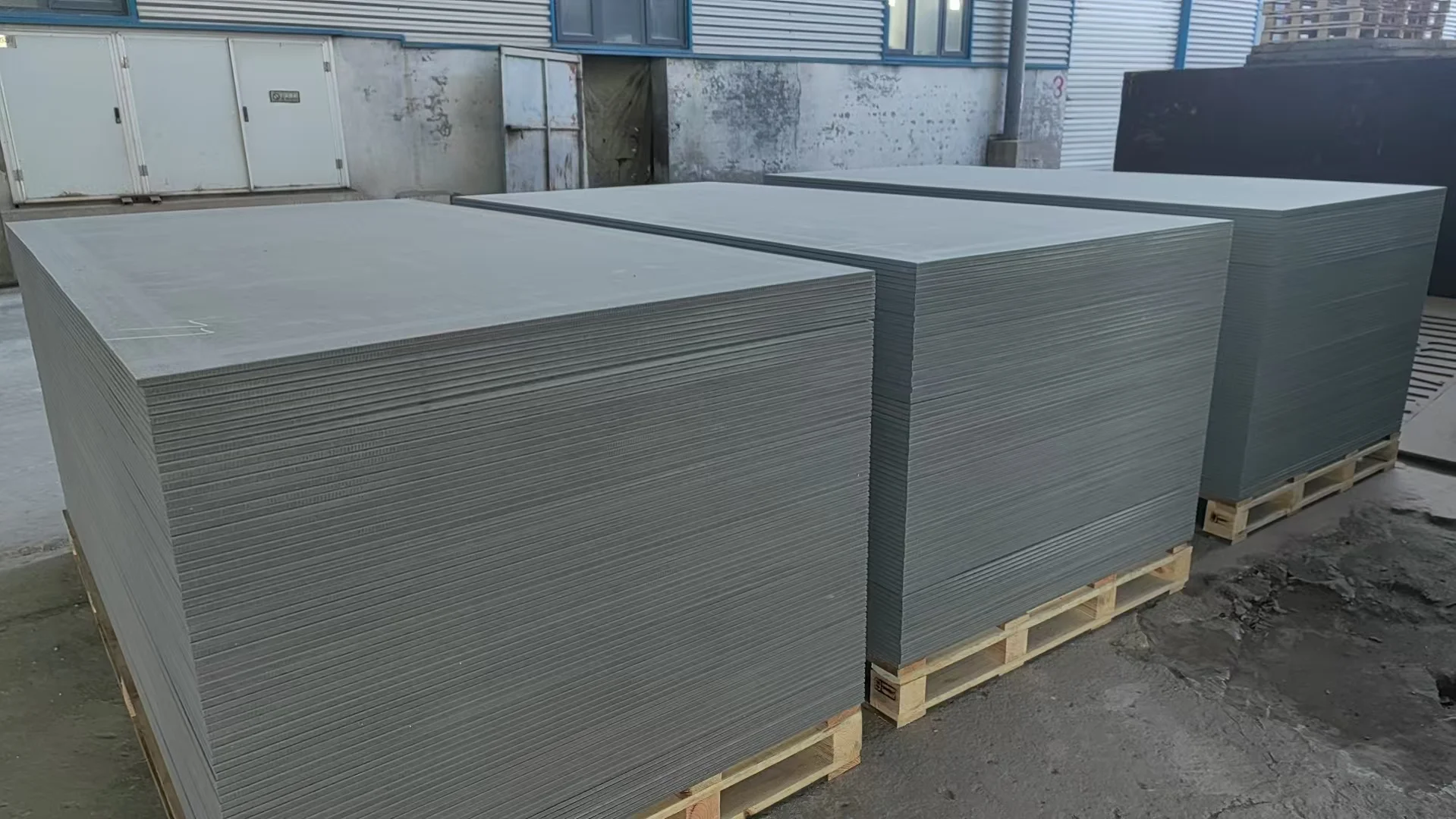
I increasingly see builders move away from generic board selection because bathroom failures and waterproof repairs are expensive and difficult after installation is complete.
Wet areas now demand specialized system thinking.
TRUSUS Recommended Cement Boards For Wet Areas
| Board Type | Main Advantage |
|---|---|
| High-density fiber cement board | Strong moisture resistance |
| Calcium silicate board | Excellent dimensional stability |
| Waterproof cement board | Enhanced mold protection |
Material selection should match environmental conditions.
TRUSUS Important Performance Indicators
| Performance Factor | Recommended Level |
|---|---|
| Water absorption | Below 15% |
| Density | Above 1.5 g/cm³ |
| Dimensional stability | Low expansion rate |
Stable boards reduce long-term failure risk.
TRUSUS Why Wet Areas Need Specialized Boards
| Standard Board Risk | Possible Problem |
|---|---|
| High moisture absorption | Swelling and deformation |
| Weak dimensional stability | Tile cracking |
| Poor mold resistance | Hygiene problems |
Wet environments create continuous stress on materials.
TRUSUS Common Wet-Area Applications
| Application Area | Performance Priority |
|---|---|
| Bathrooms | Waterproof reliability |
| Kitchens | Humidity resistance |
| Swimming pools | Long-term durability |
Different spaces require different protection levels.
TRUSUS Why Waterproof Engineering Is Changing
| Traditional Wet-Area Construction | Modern Waterproof Systems |
|---|---|
| Material-only selection | Integrated system protection |
| Basic water resistance | Long-term durability focus |
| Reactive maintenance | Preventive engineering design |
Customers increasingly expect lifetime reliability.
TRUSUS The Industry Shift Behind Wet-Area Questions
| Traditional Building Material Industry | Modern Waterproof System Industry |
|---|---|
| Generic board supply | Specialized wet-area solutions |
| Product-centered sales | Performance-centered engineering |
| Basic installation support | Full waterproof consulting |
I increasingly believe wet-area engineering will become one of the most specialized areas in modern construction systems.
Can You Install Fiber Cement Board Directly Over Studs?
Yes, fiber cement board can be installed directly over studs when the framing spacing, board thickness, and fastening system meet structural requirements. For most wall applications, stud spacing should remain within 400 mm, and board thickness should usually be at least 12 mm.
TRUSUS installation insight: direct stud installation works well only when the framing system and board properties are designed together.
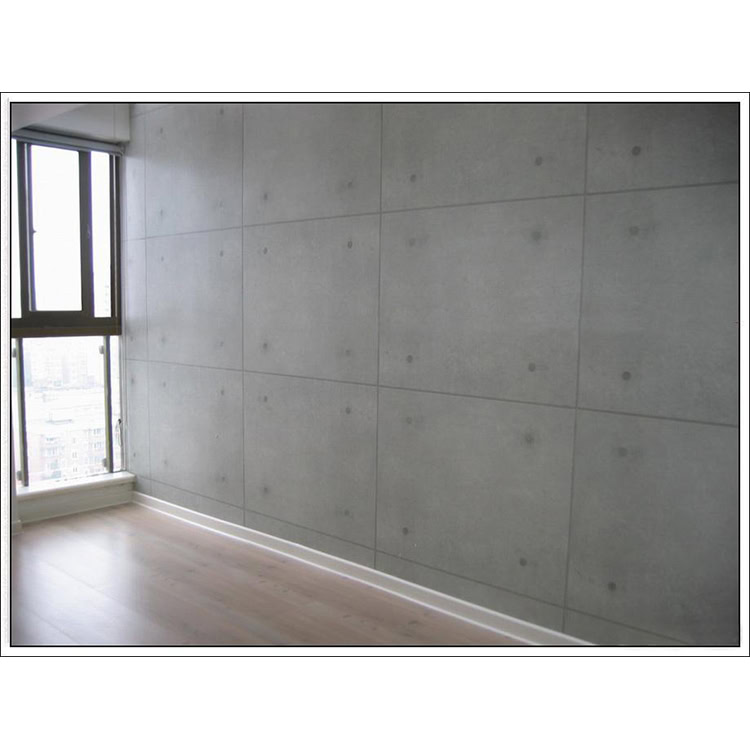
I increasingly see installers underestimate the importance of support spacing because fiber cement boards are stronger than gypsum boards but still require proper structural backing.
Support design controls long-term stability.
TRUSUS Recommended Framing Standards
| Installation Factor | Recommendation |
|---|---|
| Stud spacing | ≤400 mm |
| Board thickness | ≥12 mm |
| Fastener type | Corrosion-resistant screws |
Correct installation reduces movement stress.
TRUSUS Why Board Thickness Matters
| Thin Board Risk | Possible Result |
|---|---|
| Excessive flexing | Joint cracking |
| Weak load distribution | Surface instability |
| Fastener stress concentration | Edge damage |
Board rigidity improves wall performance.
TRUSUS Importance Of Fastener Selection
| Fastener Requirement | Purpose |
|---|---|
| Galvanized screws | Corrosion protection |
| Proper screw spacing | Load distribution |
| Controlled screw depth | Surface protection |
Fasteners are critical structural components.
TRUSUS Common Direct Installation Applications
| Application Area | Typical Use |
|---|---|
| Interior wet walls | Bathroom systems |
| Exterior facades | Cladding support |
| Utility rooms | Durable wall systems |
Fiber cement boards support many demanding applications.
TRUSUS Why System Engineering Is Growing
| Traditional Board Installation | Modern Framing Engineering |
|---|---|
| Simple wall covering | Engineered wall systems |
| Generic support layouts | Load-calculated framing |
| Experience-based installation | Performance-based installation |
Construction quality increasingly depends on system coordination.
TRUSUS The Market Evolution Behind Installation Questions
| Traditional Construction Industry | Modern Technical Service Industry |
|---|---|
| Material delivery focus | Structural installation support |
| Product specification discussions | Engineering compatibility analysis |
| Generic installation methods | Application-specific detailing |
I increasingly see technical installation support becoming a major value driver for manufacturers.
Does Cement Board Expand When Wet?
Yes, cement board expands slightly when exposed to moisture, but high-quality boards are engineered to minimize dimensional movement. Premium fiber cement boards usually maintain wet expansion rates below 0.25%, which helps preserve structural stability and finish quality.
TRUSUS durability insight: complete elimination of expansion is unrealistic, but controlled movement is the key to long-term performance.
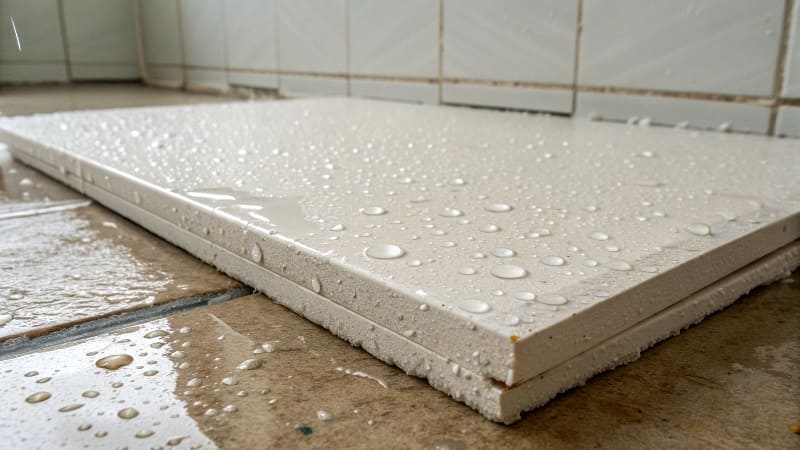
I increasingly see project teams pay closer attention to expansion behavior because modern tile finishes and waterproof systems are less tolerant of movement defects.
Dimensional control now plays a larger role in quality management.
TRUSUS Why Cement Boards Expand
| Cause | Effect |
|---|---|
| Moisture absorption | Material swelling |
| Temperature changes | Dimensional movement |
| Internal stress | Surface deformation |
All cement-based materials experience some movement.
TRUSUS How Manufacturers Reduce Expansion
| Manufacturing Method | Benefit |
|---|---|
| Fiber optimization | Better stability |
| Controlled curing | Reduced shrinkage |
| Dense formulations | Lower water absorption |
Production quality strongly affects stability.
TRUSUS Problems Caused By Excessive Expansion
| Expansion Issue | Possible Result |
|---|---|
| Tile cracking | Surface damage |
| Joint opening | Waterproof failure |
| Structural stress | Reduced durability |
Movement control protects the entire wall system.
TRUSUS Recommended Installation Practices
| Installation Practice | Purpose |
|---|---|
| Expansion gaps | Stress relief |
| Flexible joint sealants | Movement absorption |
| Waterproof membranes | Moisture control |
Good installation reduces movement impact.
TRUSUS Why Dimensional Stability Is Becoming More Important
| Traditional Construction Expectations | Modern Finishing Expectations |
|---|---|
| Basic moisture resistance | Precise dimensional stability |
| Functional wall systems | Long-term finish protection |
| Material tolerance acceptance | Strict movement control |
Modern buildings demand higher precision.
TRUSUS The Industry Shift Behind Expansion Questions
| Traditional Cement Board Industry | Modern Building Performance Industry |
|---|---|
| Strength-focused production | Stability-focused engineering |
| General moisture resistance | Controlled dimensional behavior |
| Product-only competition | System reliability competition |
I increasingly believe dimensional stability will become one of the most important quality indicators for wet-area boards.
How Many Layers Of Cement Board For A Wet Room Floor?
Most wet room floors use two layers of cement board to improve structural strength, waterproof reliability, and load distribution. A common system uses two 12 mm boards with flexible adhesive between layers, creating a total thickness of about 24–30 mm.
TRUSUS flooring insight: wet room floors fail more often from system weakness than from individual material failure.
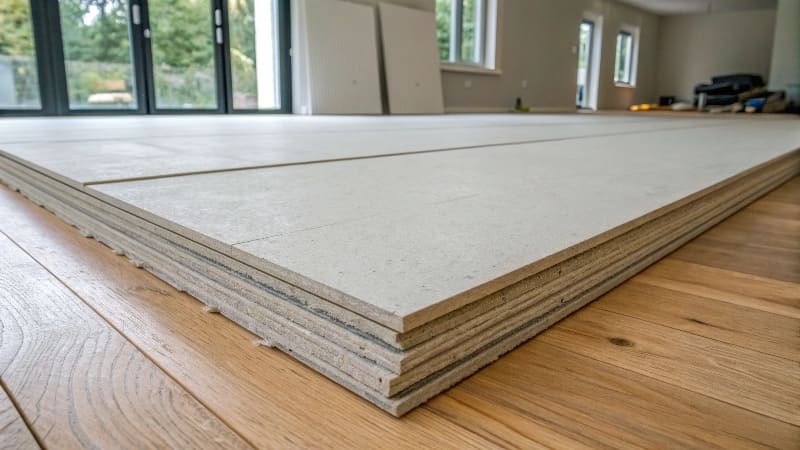
I increasingly see designers choose double-layer systems because modern wet rooms must support tiles, waterproof membranes, underfloor heating, and long-term moisture exposure together.
Floor systems now require more engineering coordination.
TRUSUS Typical Wet Room Floor Structure
| Layer | Function |
|---|---|
| Lower cement board | Structural support |
| Flexible adhesive layer | Stress absorption |
| Upper cement board | Waterproof substrate |
Each layer supports overall system performance.
TRUSUS Why Double Layers Improve Performance
| Double-Layer Benefit | Result |
|---|---|
| Better rigidity | Reduced floor flex |
| Improved load distribution | Better tile stability |
| Enhanced waterproof support | Longer service life |
Layered systems improve durability.
TRUSUS Why Adhesive Selection Matters
| Adhesive Property | Importance |
|---|---|
| Flexibility | Absorbs movement |
| Moisture resistance | Prevents bond failure |
| Strong adhesion | Structural stability |
Bonding quality affects floor reliability.
TRUSUS Common Wet Room Floor Risks
| Risk Factor | Possible Failure |
|---|---|
| Weak subfloor | Tile cracking |
| Poor waterproofing | Water leakage |
| Insufficient rigidity | Surface movement |
Wet floors experience constant stress conditions.
TRUSUS Why Waterproof Floor Standards Are Rising
| Traditional Bathroom Construction | Modern Wet Room Engineering |
|---|---|
| Single-layer flooring | Multi-layer waterproof systems |
| Basic moisture protection | Long-term structural durability |
| Simple tile support | Integrated waterproof assemblies |
Modern wet rooms require complete system performance.
TRUSUS The Industry Transformation Behind Floor System Questions
| Traditional Flooring Industry | Modern Waterproof Engineering Industry |
|---|---|
| Material-only solutions | Integrated floor system design |
| Generic installation methods | Performance-calculated assemblies |
| Short-term functionality | Long-term reliability engineering |
I increasingly see wet-room flooring becoming one of the most technically demanding areas in interior construction.
Conclusion
At TRUSUS, I see wet-area construction evolving from simple material selection into complete waterproof system engineering. Future industry leadership will depend on dimensional stability, moisture control, structural coordination, and the ability to deliver reliable long-term wet-area protection through integrated technical solutions.
