




What is the Strongest Cement Board?
Many builders ask which cement board offers the highest strength, but understanding board strength involves more than compressive numbers. The strongest cement board combines density, fiber reinforcement, and durability that ensure stability under load and resistance to deformation across demanding construction applications.
The strongest cement boards are high-density fiber cement boards reinforced with cellulose or glass fibers to improve flexural strength, impact resistance, and dimensional stability, suitable for exterior cladding, flooring substrates, and heavy-duty wall systems where long-term structural performance is required.
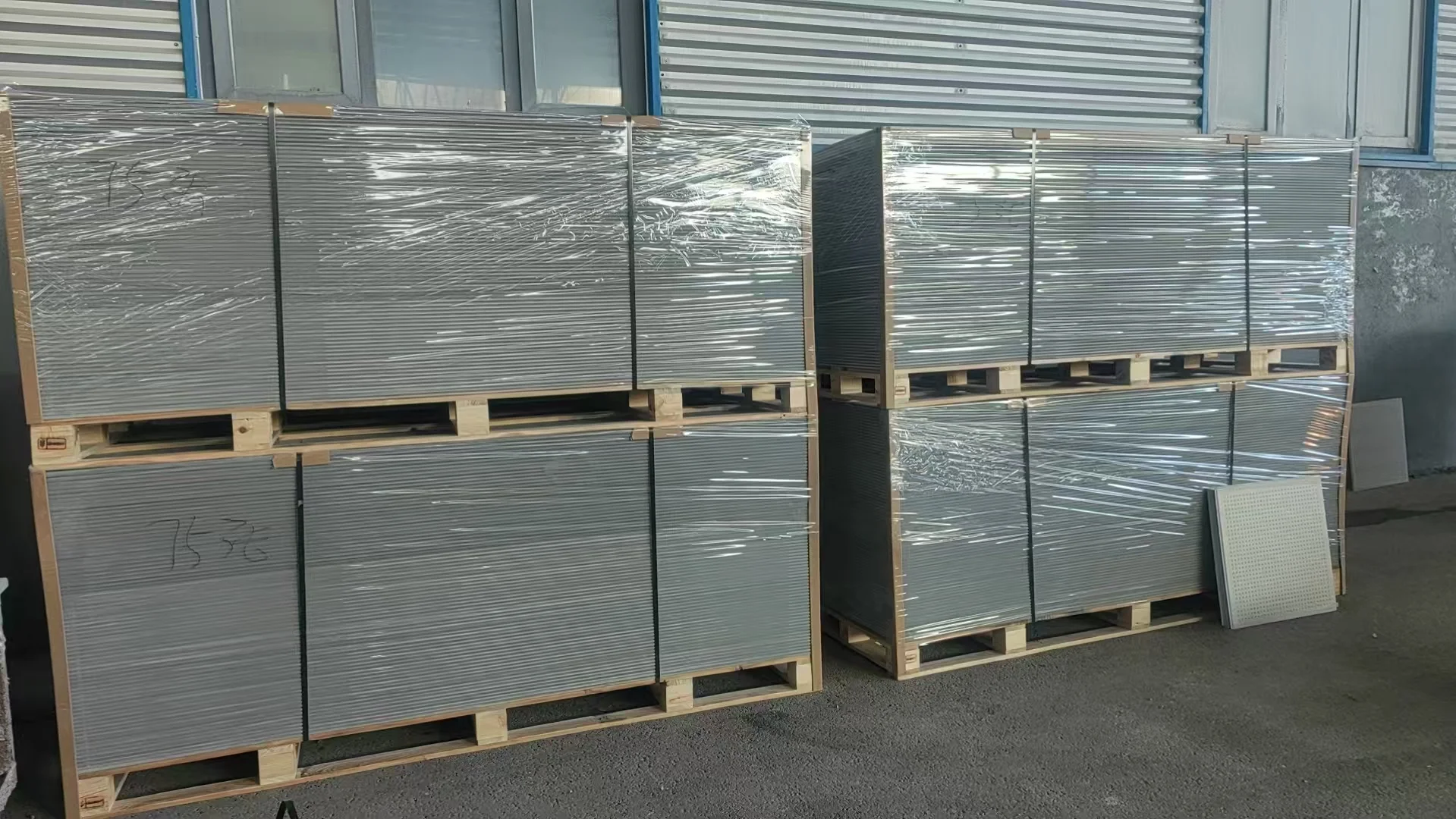
Through years in the cement board industry, I found that true strength comes not only from compression capacity but from engineered balance between hardness, moisture resistance, and flexibility, allowing boards to serve structural and surface functions efficiently while avoiding brittleness and premature failure.
Can Cement Board Support Weight?
Understanding cement board load capacity helps determine its structural applications and installation limits. Cement board support capability depends on density, thickness, and substrate integration, defining how much load it can safely bear while maintaining stability over long-term use.
Cement board can support significant weight depending on configuration and thickness, with standard 12mm boards supporting tiled surfaces and load-bearing panels handling up to 200–300 kg/m² when properly installed on framing systems, suitable for flooring, facades, and wall-mounted applications requiring reliable strength.
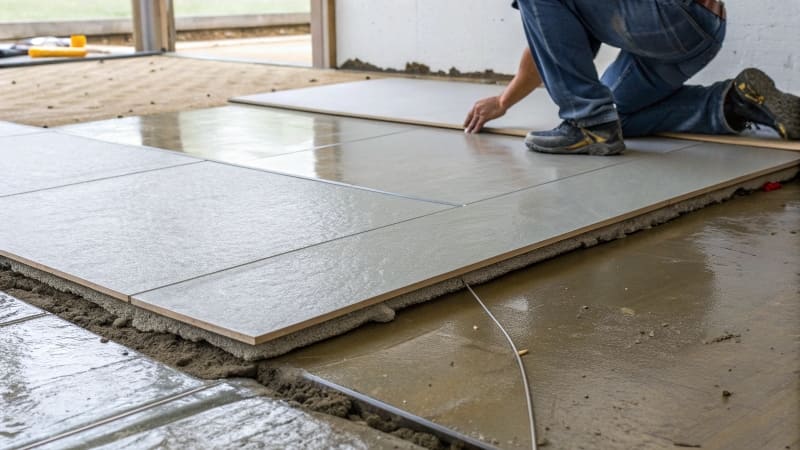
Comprehensive Load Capacity and Structural Performance Analysis
Cement board load-bearing capacity integrates material strength, installation quality, and design configuration to deliver reliable performance in weight-support applications. During my experience developing high-performance boards, I learned that cement board can easily carry heavy finishes, mechanical fixtures, and structural loads when correctly installed with supportive framing systems.
Material composition determines structural capacity through high-density cement matrix combined with fiber reinforcement that distributes stress while resisting cracking and compression failure.
Thickness directly affects load capacity, with thicker boards providing enhanced strength suitable for flooring and heavy-duty wall cladding applications in both residential and commercial environments.
Installation method influences performance through mechanical fasteners, adhesive bonding, and support framing that collectively ensure load distribution and structural stability under continuous service conditions.
Framing integration provides structural support for large-format boards in facade systems and modular assemblies while preventing stress concentration and deflection under heavy loading.
Deflection limits remain low under normal operational loads ensuring surface stability for heavy finishes including ceramic tiles, stone veneers, and mechanical fixtures attached directly to cement board surfaces.
Environmental resistance supports sustained performance even under moisture, temperature, and mechanical stress variations while maintaining structural integrity and long-term durability in exposed conditions.
Applications include wet area substrates, prefabricated walls, and modular flooring systems requiring reliable strength, dimensional stability, and consistent performance throughout building lifespan.
Engineering verification ensures compliance with load requirements through proper material testing and structural design that aligns product selection to building specifications for safe operation.
Maintenance-free performance offers reliable long-term durability without periodic reinforcement or replacement, reducing costs and ensuring structural reliability over decades.
| Thickness | Load Capacity (Approx.) | Recommended Use | Support Requirements |
|---|---|---|---|
| 6mm Board | Light-duty (up to 100 kg/m²) | Wall tiles, wet areas | Adequate backing |
| 9mm Board | Medium-duty (up to 200 kg/m²) | Wall systems, interior cladding | Steel framing |
| 12mm Board | Heavy-duty (up to 300 kg/m²) | Floors, facades, modular structures | Rigid framing |
| 15mm+ Board | Structural-grade (350+ kg/m²) | Exterior load surfaces | Advanced support |
| Reinforced high-density | Structural load zones | Modular architecture | Engineered assembly |
Is Cement Board as Strong as Plywood?
Many compare cement board strength to plywood, but these materials serve different engineering purposes. Cement board and plywood differ in composition, flexibility, and environmental resistance, creating distinct performance profiles under various building conditions.
Cement board is stronger and more durable than plywood in compression, moisture resistance, and longevity, though less flexible, making it ideal for stable, rigid installations such as tile backers and exterior sheathing, whereas plywood provides flexibility and impact absorption suitable for wood-framed structures.
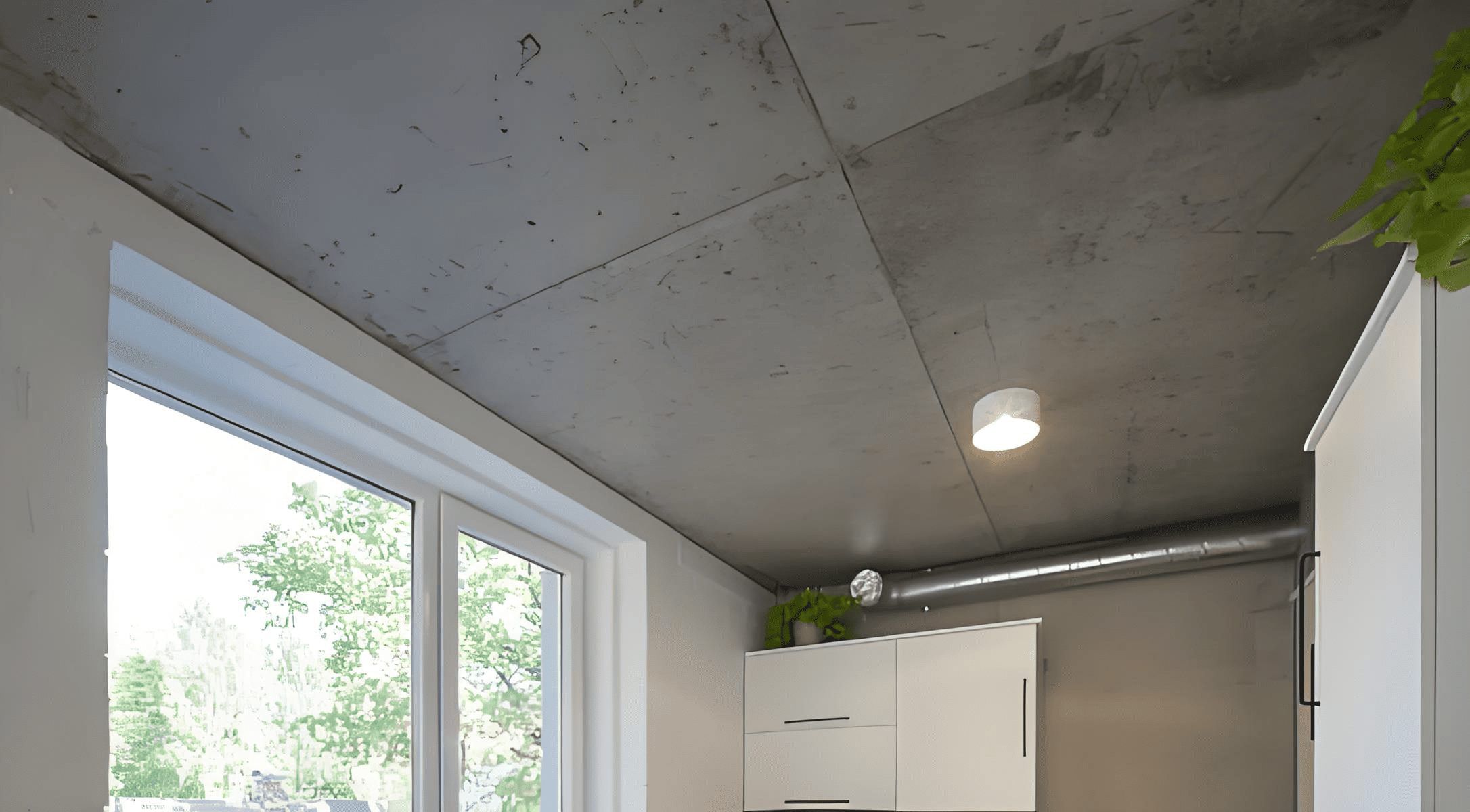
Critical Comparative Analysis of Cement Board versus Plywood
Cement board and plywood comparison involves structural mechanics, material properties, and environmental performance differences. Over years working with both materials, I observed that cement board provides long-lasting, moisture-proof stability, while plywood offers flexibility and ease of handling for timber-based construction systems.
Strength characteristics show cement board exceeding plywood in compressive capacity and dimensional stability under load while offering superior resistance to moisture and mold, essential in wet environments and exterior applications.
Plywood outperforms cement board in impact absorption and flexibility, providing resilience against temporary stress though prone to swelling, delamination, and decay over time in humid or outdoor conditions.
Environmental tolerance favors cement board for wet areas, external facades, and flooring under tile installation where water exposure occurs frequently.
Weight differences show cement board heavier and denser requiring stronger support systems, while plywood remains lighter and easier to cut and manipulate during installation.
Fire resistance provides another advantage for cement board, classified as non-combustible versus plywood which is flammable without treatment, enhancing safety in fire-prone zones.
Long-term maintenance favors cement board with minimal degradation or replacement needs, contrasting plywood’s tendency to warp, rot, or lose structural integrity under prolonged moisture exposure.
Cost considerations differ depending on project requirements; plywood offers affordable flexibility, while cement board provides lifetime durability and structural reliability reducing replacement and repair cycles.
Acoustic and thermal insulation vary by board type with plywood providing moderate sound absorption and cement board contributing to mass-based noise control suitable for soundproof wall assemblies.
Installation compatibility depends on application—cement board prefers rigid framing and dry assembly, while plywood easily installs using nails and screws across timber frames without mortar-based finishes.
| Property | Cement Board | Plywood | Performance Difference |
|---|---|---|---|
| Compressive Strength | High | Moderate | Cement board stronger |
| Flexural Strength | Moderate | High | Plywood more flexible |
| Moisture Resistance | Excellent | Poor | Cement board superior |
| Decay Resistance | Excellent | Low | Cement board inorganic |
| Fire Resistance | Non-combustible | Combustible | Safety advantage |
| Impact Resistance | Moderate | High | Plywood absorbs shock |
| Weight | Heavy | Lightweight | Installation difference |
| Lifespan | Long-term | Limited | Cement board durable |
| Maintenance Needs | Minimal | High | Lower lifetime cost |
| Environmental Adaptation | Exterior suitable | Interior preferred | Application dictates |
What's the Difference Between Backer Board and Cement Board?
Understanding board categories clarifies proper material application in construction systems. Backer board and cement board share similar materials but differ in density, strength, and functional design, serving separate roles in building assemblies for both residential and commercial projects.
The difference between backer board and cement board lies in application and composition: backer board is lightweight, moisture-resistant material designed for tile bonding and wall substrates, while cement board is dense structural-grade panel capable of supporting heavier loads, external cladding, and modular frame systems.
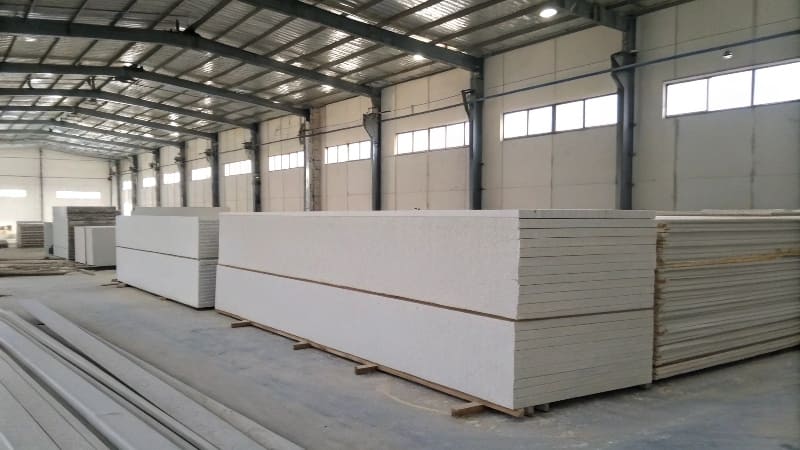
Detailed Functional Comparison Between Backer Board and Cement Board
Backer board and cement board share structural chemistry but differ in manufacturing density, reinforcement methods, and performance intent. During my years producing board materials, I learned that understanding these differences ensures proper selection for moisture zones, installation demands, and structural performance expectations.
Material composition distinguishes cement board as high-strength plate using Portland cement and fiber reinforcement while backer board may include lightweight gypsum or polymer additives enhancing flexibility and tile adhesion.
Density variation defines usage scope where cement board supports structural and external loads while backer board remains suitable for interior wet areas behind tiles or decorative panels providing smooth bonding surfaces.
Moisture resistance is strong in both materials though cement board offers full durability under continuous wet exposure compared to backer board’s limited endurance under prolonged saturation.
Weight differences influence handling ease; backer boards are lighter for small-scale tile installations, while cement boards carry higher mass supporting structural loads and long spans.
Installation methods align with performance function—backer board installs easily using standard screws and adhesive for tiles while cement board integration involves mechanical fastening and framing alignment for structural applications.
Fire resistance favors cement board for external or heavy-use installations where safety standards require non-combustibility while backer boards provide sufficient indoor fire resistance but less structural protection.
Strength characteristics underline functional purpose, cement boards deliver enhanced rigidity and impact tolerance while backer boards focus on surface adhesion and moisture control convenience.
Cost considerations show backer boards more affordable for light interior applications while cement boards justify higher cost through longevity and versatility across multiple building environments.
Modification ability allows both materials to be cut and drilled, though cement board demands specialized tools due to density, ensuring clean installation without edge damage.
Application overlap occurs in some wet areas but performance priorities differ—backer boards simplify finishing, cement boards sustain structural load, defining professional selection standards across projects.
| Comparison Factor | Backer Board | Cement Board | Usage Implication |
|---|---|---|---|
| Material Composition | Lightweight cement/gypsum blend | Dense cement matrix | Structural difference |
| Density | Low to moderate | High | Load capacity variation |
| Primary Application | Tile backing / wet areas | Structural cladding | Functionally distinct |
| Strength Level | Moderate | High | Load capability difference |
| Moisture Resistance | Good | Excellent | Exposure duration |
| Fire Resistance | Moderate | Non-combustible | Safety advantage |
| Weight | Lightweight | Heavy | Installation method difference |
| Cost | Affordable | Higher | Based on purpose |
| Installation Flexibility | Easy handling | Requires framing | Project type determines |
| Durability | Medium-term | Long-term | Lifecycle consideration |
| End Use Areas | Bathrooms, kitchens | Facades, floors, external walls | Structural system integration |
Conclusion
The strongest cement board combines high density and fiber reinforcement delivering exceptional durability; cement board supports significant weight when properly installed, surpasses plywood in compression and moisture resistance though less flexible, and differs from backer board by being heavier, stronger, and structurally suited for exterior or heavy-duty applications, making it vital for long-term building stability and reduced maintenance.
