




What Is the Recommended Spacing for Nailing Fibre Cement Sheets?
The recommended spacing for nailing fibre cement sheets is 200 mm along sheet edges and 300 mm on intermediate supports. This spacing ensures even stress distribution and prevents board warping or cracking.
TRUSUS installation insight: spacing is not routine—it’s precision in disguise.
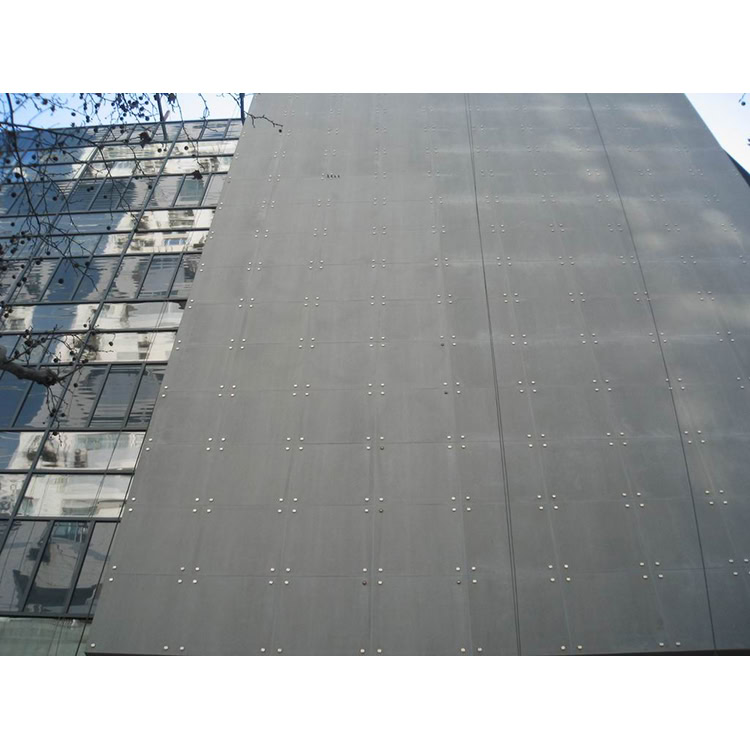
Keep nails or screws in a straight alignment, perpendicular to the board, and never overdrive them. Consistency here means dimensional stability for years.
How Far from the Edge of Fibre Cement Sheets Should You Locate Fixings?
Fixings should be located at least 12 mm from sheet edges and corners. If the board is thinner than 9 mm, increase care to avoid edge-breaking by keeping fixings slightly further in, around 15 mm.
fixing insight: edges are fragile boundaries—respect their limits to protect their strength.
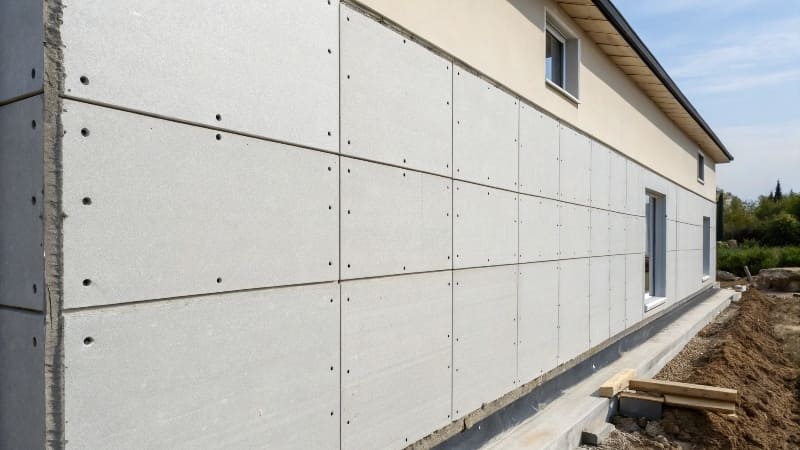
Edge Fixing Guide
| Sheet Thickness | Minimum Edge Distance | Minimum End Distance | Note |
|---|---|---|---|
| 6 mm | 12 mm | 20 mm | Light cladding or lining |
| 9 mm | 12–15 mm | 20–25 mm | Internal walls or partitions |
| 12 mm | 15 mm | 25 mm | Exterior façade systems |
| 16 mm+ | 20 mm | 30 mm | Structural or underlay sheets |
Avoid placing fixings too close to corners, and always use corrosion-resistant screws or ring-shank nails for durability.
How to Fill Gaps Between Fibre Cement Sheets?
Gaps between fibre cement sheets should be filled with flexible joint sealant or backer rod plus acrylic or polyurethane filler, depending on whether the joint will be painted or left exposed.
finishing insight: every filled gap is a promise against water, wind, and time.
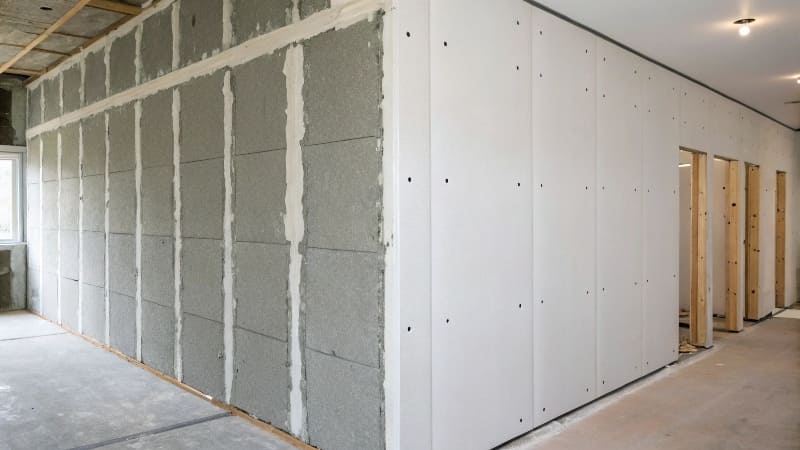
Gap-Filling Steps
| Step | Action | Purpose | Note |
|---|---|---|---|
| 1 | Clean joint edges | Remove dust and debris | Better adhesion |
| 2 | Insert backing rod (if wide) | Maintain correct depth | Choose neutral-cure type |
| 3 | Apply joint sealant | Create flexible waterproof seal | Smooth with spatula |
| 4 | Let cure completely | Avoid premature coating | Follow manufacturer curing time |
| 5 | Paint or finish surface | Match final texture | Choose breathable coatings |
Correct joint treatment manages movement from thermal expansion and keeps the wall surface stable through seasons.
How to Install Fibre Cement Sheets?
To install fibre cement sheets, prepare the frame, position the panels with gaps, fasten with proper spacing, and seal joints. Temperature and humidity should be stable during installation to avoid later deformation.
system insight: installation is not just attachment—it’s the choreography of structure, load, and material.
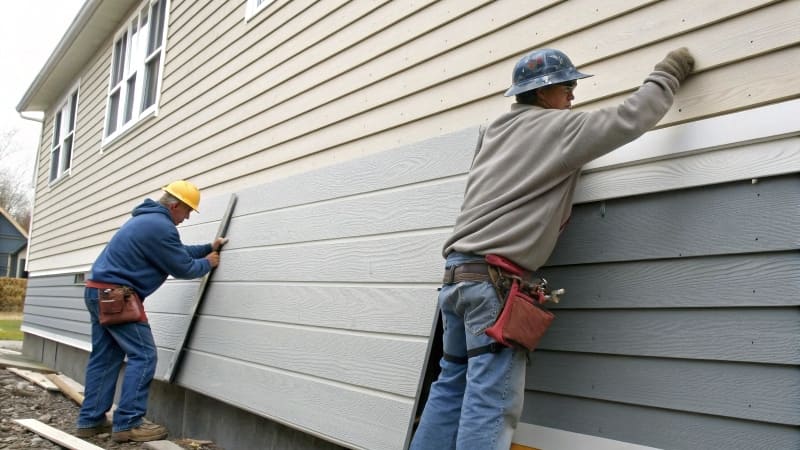
Step-by-Step Installation Process
| Step | Description | Key Points |
|---|---|---|
| Frame Preparation | Ensure steel or timber frame is plumb, level, and aligned | Maximum spacing 600 mm for internal walls, 400 mm external |
| Sheet Cutting | Score and snap or saw using carbide blade | Handle edges carefully |
| Pre-drilling (optional) | Drill holes slightly larger than fastener size | Prevent cracking |
| Fixing Sheets | Use recommended spacing (200 mm edge, 300 mm center) | Keep heads flush, not buried |
| Joint Treatment | Leave 3–5 mm gap; fill and tape as required | Use flexible sealant |
| Finishing | Apply primer and paint or external coating | Follow curing instructions |
Following these steps builds not just a surface, but a system that responds to expansion, vibration, and weathering in balance.
Conclusion
At TRUSUS, I see fibre cement sheet installation as a form of quiet engineering. Each nail, gap, and seal carries the logic of structure and longevity. When precision becomes routine, buildings become enduring systems, not just assembled panels.
