



What is the most common problem with fiber cement siding?
What is the most common problem with fiber cement siding?
When people think about fiber cement siding, they often worry about cracking and water damage, but the reality behind these concerns is much simpler than it seems.
The most common problem with fiber cement siding is improper installation—issues like cracking, warping, or moisture damage usually result from poor craftsmanship or missing system components, not from the material itself.
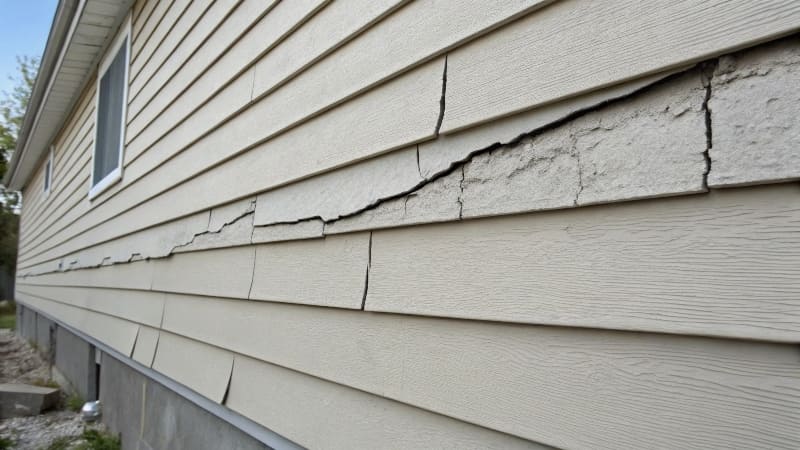
Over years of working with fiber cement boards, I’ve found that most complaints trace back to installation errors. The boards themselves are strong and stable, but they depend on proper framing, sealing, and ventilation. Without these, surface cracks or moisture expansion can appear. Fiber cement is part of a building system, not a standalone layer—it needs coordinated components like vapor barriers and precise spacing. When done right, these so-called “problems” never show up, and the siding performs beautifully through decades of exposure.
What are the negatives of hardie board siding?
Many builders describe fiber cement siding as “sturdy but demanding.” So what makes it challenging for some users?
The main negatives are its weight, cutting complexity, and need for skilled installation. These factors can lead to higher labor costs and slower project completion if not properly planned.
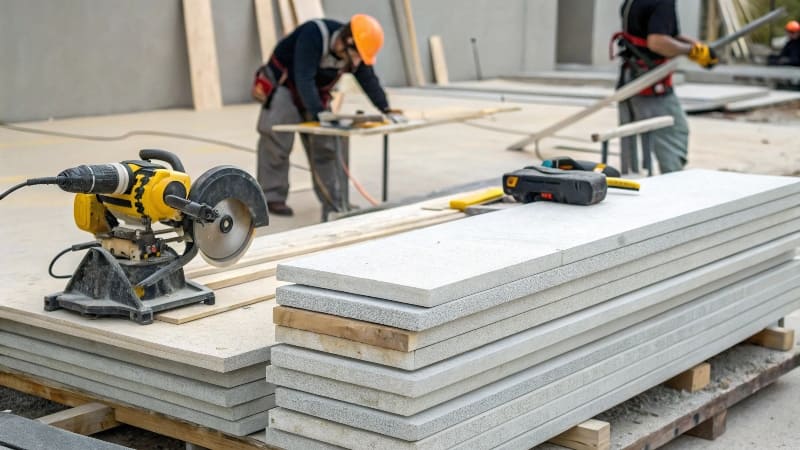
I’ve watched installers struggle when treating fiber cement like wood—it doesn’t behave that way. It’s heavier, less flexible, and needs dedicated tools for cutting and fixing. But these challenges come from the same qualities that make it durable. When the right methods are applied—such as mechanical fastening and pre-drilled holes—these “negatives” turn into predictable steps in a quality system.
| Negative Perception | Cause | Corrective Approach |
|---|---|---|
| Heavy weight | High density material | Use strong framing and secure anchors |
| Cutting dust | Cement content | Employ dust collection or wet cutting |
| Installation cost | Skilled labor required | Train workers on proper system method |
| Surface cracking | Misaligned fasteners | Maintain gaps and use compliant fillers |
These factors don’t mean fiber cement is weak. They mean it needs respect and precision. Once teams adopt a system mindset rather than a “material-only” view, they realize the product’s reliability far outweighs early complexity.
What are the disadvantages of cement fibre board?
Some say that cement fibre boards have more disadvantages than advantages. But are those concerns really valid?
The main disadvantages appear when system coordination is missing—without proper joints, sealing, or support structures, boards may absorb moisture or lose stability over time.
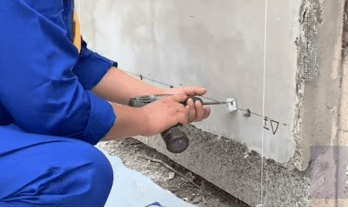
I’ve reviewed many sites where people blamed the board for installation failures. In reality, cement fibre boards perform best as part of a complete assembly. They need joint systems, sealants, and occasional maintenance. These are not flaws—they’re design requirements. The perception of disadvantage often comes from comparing it to products that require no framework or preparation. Cement fibre boards offer better fire protection, higher impact resistance, and superior longevity, which come with structural expectations.
| Perceived Disadvantage | Real Cause | Solution |
|---|---|---|
| Moisture sensitivity | Missing waterproof membrane | Add vapor barrier underlay |
| Edge cracking | Poor fastening during installation | Use flexible joint compound |
| Weight concern | Dense composition for strength | Design supporting substructure |
| Thermal expansion | Ignoring gap recommendations | Follow expansion joint guidelines |
I see this misunderstanding often. When builders follow instructions and treat each board as part of a system—like roofing or wall assemblies—the material lasts decades without significant wear or deformation. The problem isn’t the board; it’s the missing system logic.
What is the life expectancy of fiber cement siding?
Durability matters most when selecting exterior materials. So how long does fiber cement siding really last?
Fiber cement siding can last between 30 and 50 years, depending on installation quality, environmental exposure, and periodic maintenance practices.
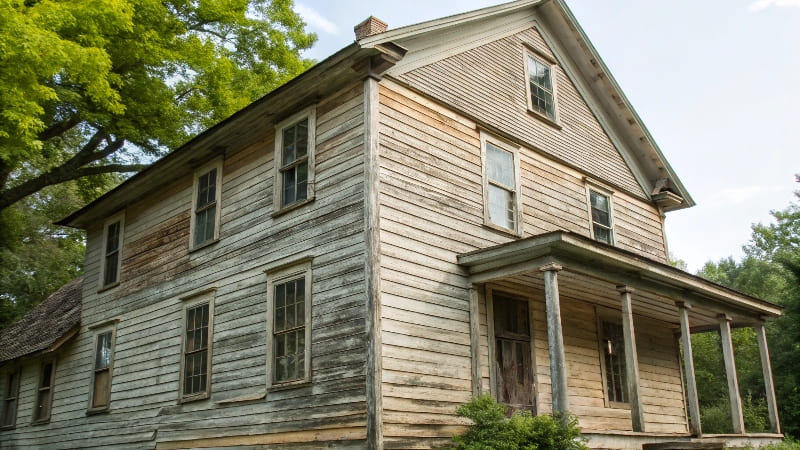
From production to installation, fiber cement is engineered for longevity. Its resistance to fire, insects, and rot makes it one of the most reliable modern siding choices. The difference lies in care—routine inspection and repainting maintain its beauty and structural integrity. I’ve seen projects remain solid after 40 years, proving that the real lifespan depends less on the product and more on understanding its performance system.
| Influencing Factor | Explanation | Recommended Practice |
|---|---|---|
| Installation accuracy | Determines initial structural integrity | Hire trained installers |
| Environmental exposure | Coastal or humid regions affect lifespan | Apply protective coatings regularly |
| Surface treatment | Paint quality and adhesion matter | Use acrylic paints with primers |
| Maintenance cycle | Checks for cracks and joints annually | Repair minor issues quickly |
Fiber cement doesn’t promise to “last forever,” but its life expectancy is among the highest of all siding options. It rewards those who use it with precision and care, becoming a long-term architectural solution rather than a short-term product.
Conclusion
Fiber cement isn’t fragile—it’s systematic. When installed and maintained correctly, it evolves from “problem material” into one of the most enduring modern building solutions.