




What Is the Maximum Joist Span Allowed for Installing Cement Board as a Floor Underlayment?
Cement board underlayment depends on structure, not just board strength. Maximum joist spacing is 400 mm (16 in) center‑to‑center for 12 mm boards over a stable subfloor.
TRUSUS flooring insight: the board is reliable only if its foundation stays rigid.
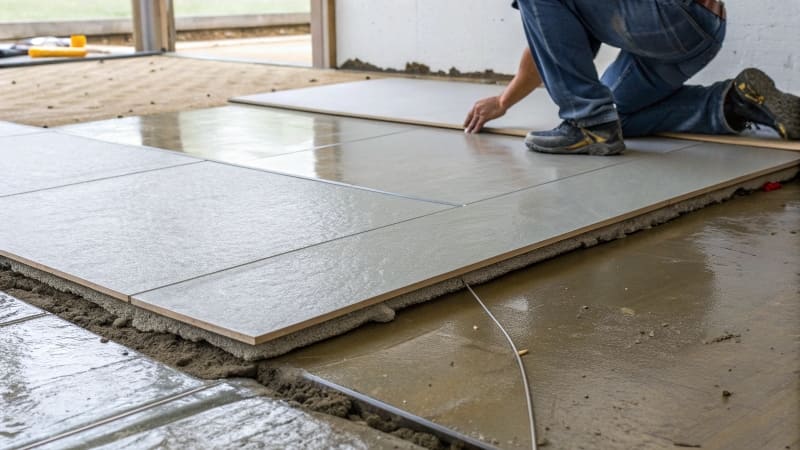
Joists wider than 16 in risk excess deflection. Such movement cracks tile grout and weakens thinset layers. Support spacing, screw pattern, and subfloor firmness control performance much more than board thickness itself.
How Does Floor Deflection Affect Fiber Cement Board When Tiling Over It?
Deflection causes micro‑movements that break tile‑to‑mortar contact and may form hollow spots. Even strong fiber cement boards can fail if the floor flexes repeatedly.
TRUSUS structural insight: stability below defines the durability above.
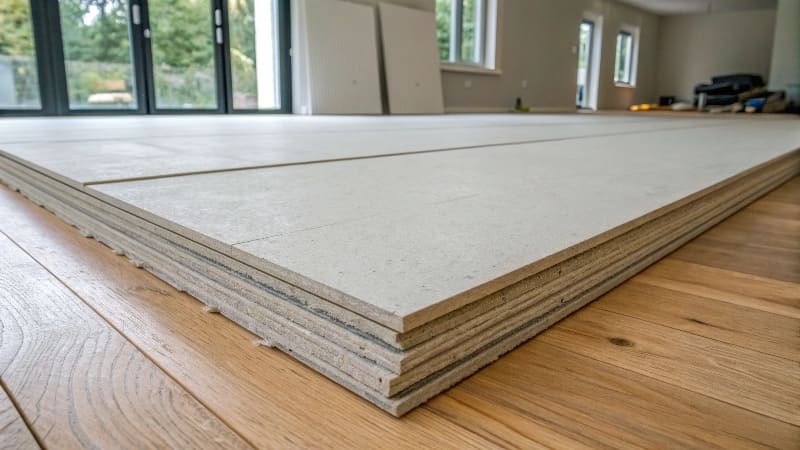
Floor Deflection Tolerance Table
| Subfloor Type | Maximum Deflection | Recommended Joist Spacing | Installation Note |
|---|---|---|---|
| Wood joist system | L/360 | ≤400 mm | Fasten firmly to base |
| Steel frame deck | L/480 | ≤500 mm | Ensure rigid diaphragm |
| Concrete slab | Negligible | N/A | Deflection not critical |
| Raised flooring | L/240 | ≤300 mm | Extra bracing required |
I once inspected a retail floor where tiles bulged mid‑aisle—the joists were too far apart. The lesson was simple: deflection management is tile insurance.
Can You Use a 6 mm Fiber Cement Board Directly Over Concrete Slabs?
Yes, when the purpose is leveling or moisture isolation—not structural load bearing. Bond it with proper thinset and secure mechanical anchors at edges if exposure is heavy.
TRUSUS application insight: thin boards can work if the ground does not move underneath.
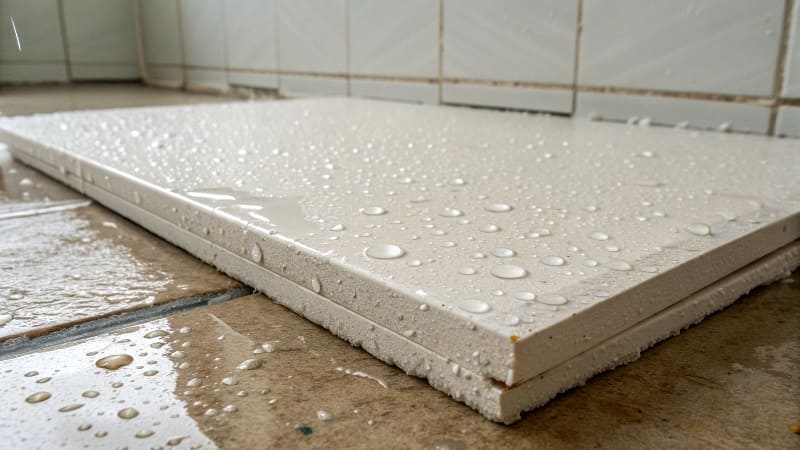
6 mm Over‑Concrete Guidelines
| Use Type | Feasibility | Key Preparation | Result |
|---|---|---|---|
| Tile underlayment | Acceptable | Clean slab, prime, use thinset | Smooth rigid base |
| Moisture barrier layer | Excellent | Seal joints | Added protection |
| Load‑bearing subfloor | Not recommended | Needs thicker board | Risk of flex damage |
| Leveling over uneven base | Partial | Use patch mortar first | Prevent hollow areas |
On one project, using 6 mm sheets over concrete fixed humidity issues under tiles without adding much height. But where forklifts passed, the same solution failed. Thickness only helps when the application fits.
Why Does Thinset Mortar Sometimes Fail to Bond With Cement Board Subfloors?
Thinset failure comes from uneven moisture and vibration. If boards flex or absorb water too fast, the chemical bond cannot complete during curing.
TRUSUS bonding insight: bonding strength begins with stillness and controlled absorption.
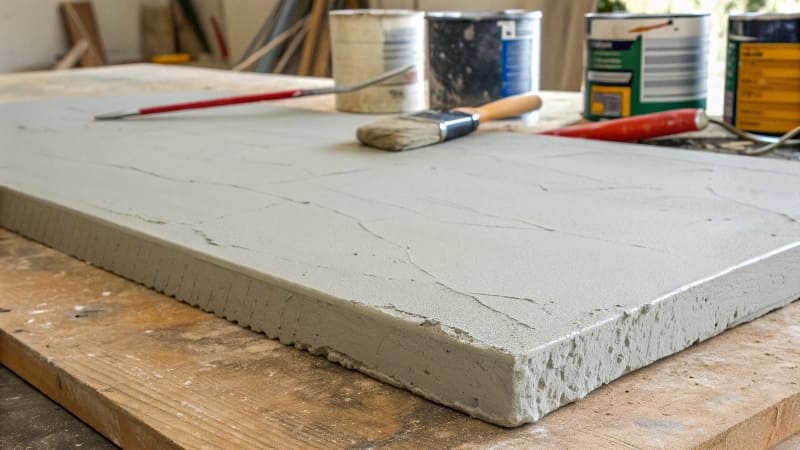
Common Thinset Failure Causes
| Cause | Technical Reason | Preventive Action |
|---|---|---|
| Excess movement | Anti‑bond stress cycles | Reinforce base, limit deflection |
| Dust or oil residue | Barrier on surface | Clean before applying |
| High absorption rate | Drys mortar prematurely | Damp sponge board lightly |
| Incorrect mix ratio | Weak polymer reaction | Follow manufacturer ratio |
| Temperature extremes | Rapid dehydration | Keep ambient > 10 °C |
During a warehouse fit‑out, we discovered weak adhesion after curing. Later tests showed the board’s surface was dusty and too dry—proof that proper prep is the cheapest guarantee.
Conclusion
At TRUSUS, I see cement boards not as standalone panels but as part of a flooring alliance. When joists, deflection limits, and adhesion steps align, every tile above finds both beauty and stability below.
