




Should Cement Boards Be Staggered?
Yes, cement boards should always be staggered during installation. This pattern distributes structural stress evenly, prevents weak lines from forming, and improves joint stability.
TRUSUS installation insight: staggering boards isn’t a visual trick—it’s structural intelligence.
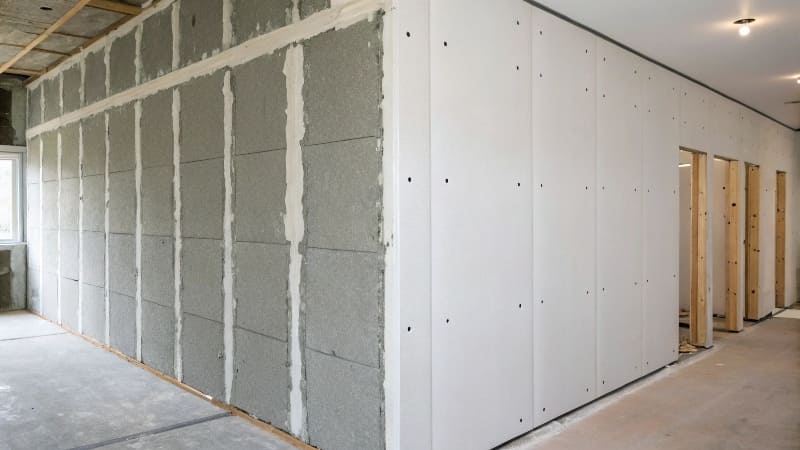
Aligning joints can cause cracks where two seams meet. Staggered seams reduce stress from thermal expansion, vibration, and load variations, allowing the surface to maintain long‑term integrity.
Staggered Installation Summary
| Installation Type | Joint Pattern | Purpose | Risk if Ignored |
|---|---|---|---|
| Wall Application | Staggered or Brick Pattern | Stress dispersion | Visible cracking |
| Floor Underlayment | Offset by half a board | Load balance | Tile movement |
| Ceiling Mounting | Modular offset | Frame alignment | Buckling at seams |
Staggering transforms structural continuity into design stability—it’s one of the simplest ways to extend board life.
Does Cement Board Need an Expansion Gap?
Yes, cement boards require an expansion gap of about 3–5 mm between panels. The gap allows for thermal movement, humidity fluctuation, and structural vibration.
TRUSUS field insight: expansion gaps let buildings breathe—tight joints suffocate performance.
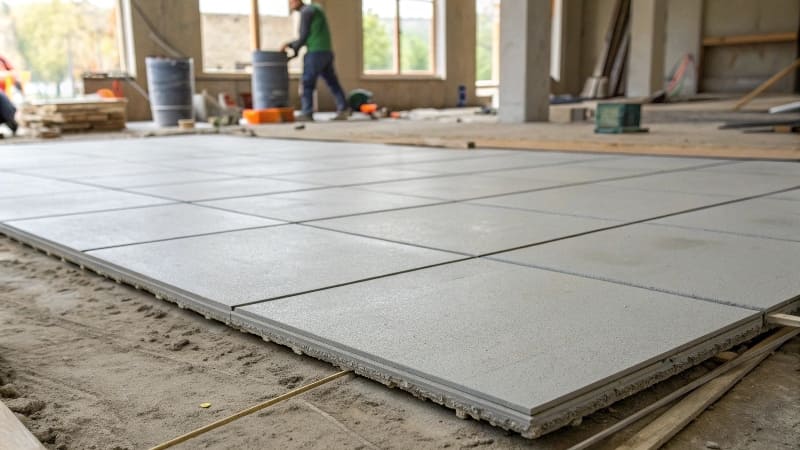
Recommended Gap Standards
| Application | Gap Size | Filling Method | Function |
|---|---|---|---|
| Interior Wall | 3 mm | Joint compound or flexible filler | Crack control |
| Exterior Cladding | 4–5 mm | Elastic sealant with backer rod | Weatherproofing |
| Flooring System | 3 mm | Thin‑set mortar | Stress relief |
| Ceiling Board | 2–3 mm | Seam tape + compound | Flex support |
Expansion gaps prevent surface bulging or cracking and ensure coating materials adhere without tension failure over time.
Does It Matter What Side of the Cement Board You Use?
Yes, cement boards have a correct side for facing out. The smoother, label‑marked surface is engineered for better finish adhesion, while the rougher side supports mechanical grip for mortar or thin‑set.
TRUSUS material insight: every surface has a purpose—knowing which side faces out defines coating quality.
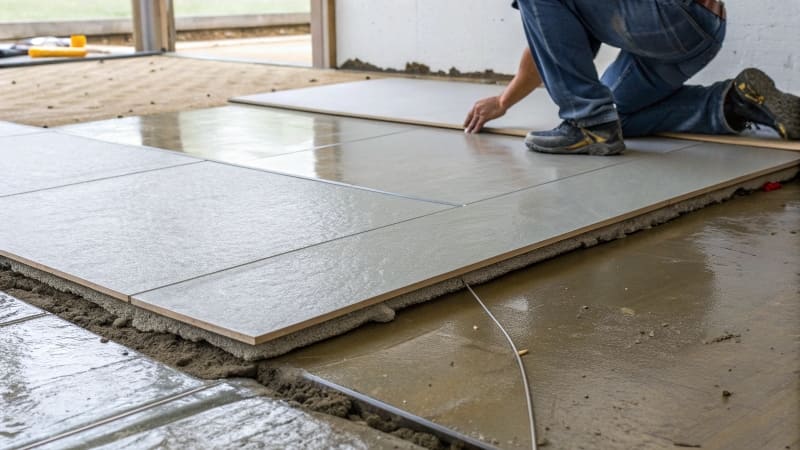
Surface Orientation Guide
| Surface Side | Texture | Best Use | Result |
|---|---|---|---|
| Smooth/Printed | Front (paint, veneer) | Interior walls | Even finishing surface |
| Rough/Unmarked | Back (adhesive contact) | Flooring or tile underlay | Stronger bonding |
| Both Primed | Dual‑use boards | Flexible orientation | Low visual risk |
Using the correct face ensures coatings and adhesives perform as intended without delamination or surface unevenness.
How to Beautify a Cement Wall?
You can beautify a cement wall with painting, panel cladding, texture coating, or polishing. Preparation—cleaning, leveling, and priming—is the foundation for any finish.
TRUSUS aesthetic insight: beauty grows from precision—surface care is the first layer of design.
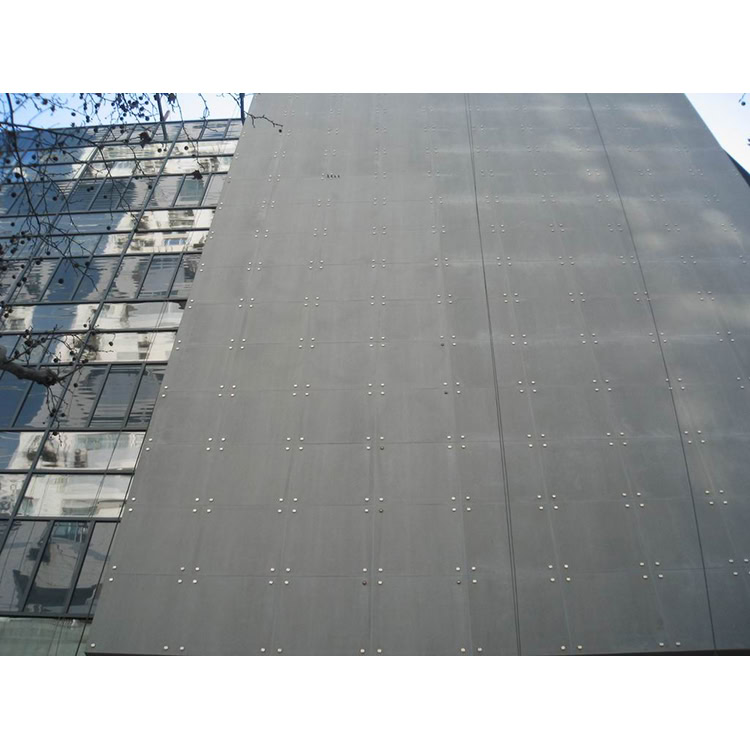
Wall Beautification Methods
| Finish Method | Tools/Materials | Visual Result | Maintenance Level |
|---|---|---|---|
| Mineral Paint Coating | Cement primer + silicate paint | Natural matte texture | Low |
| Decorative Panels | Fiber cement or wood veneer | Warm or patterned look | Medium |
| Texture Spray | Spray gun + stencil | Abstract texture play | Medium |
| Polished Concrete | Grinding + sealant | Reflective modern style | Low |
| Moss/Green Integration | Vertical planter modules | Bio‑responsive facade | High |
Combining structural consistency with artistic finishes transforms cement walls from structural surfaces into breathing architectural expressions.
Conclusion
At TRUSUS, I see cement board systems as the meeting point of structure and design. Spacing, staggering, and surface care together form the foundation of both durability and beauty.
