




Is fiber cement board a drywall?
When I talk to contractors and homeowners, many think fiber cement boards and drywall are the same thing—but they are not.
Fiber cement board is not drywall; it’s a composite material made of cement, sand, and fibers, built for moisture, impact, and fire resistance rather than interior finishing.
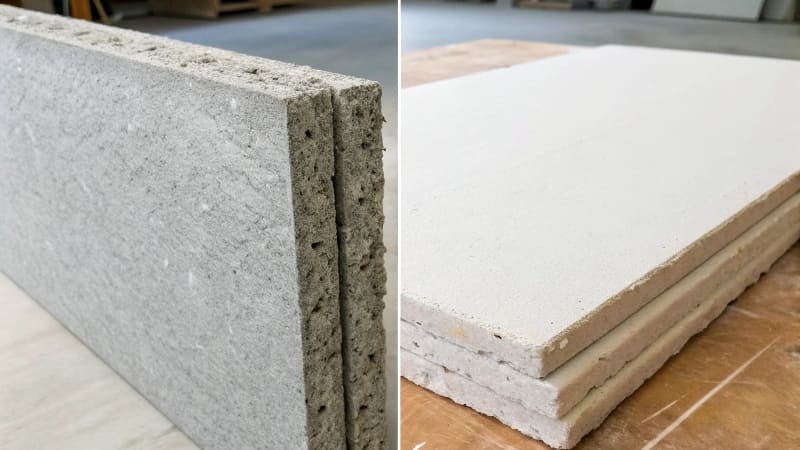
The confusion often comes from their similar panel shape, but the difference lies in purpose. Drywall (gypsum board) is designed for easy interior finishing and decoration. Fiber cement boards are dense, tough, and made for demanding spaces—like bathrooms, kitchens, and exterior walls. Trying to use them interchangeably often leads to extra costs and poor results.
Can I use cement board instead of drywall?
I’ve seen homeowners use cement board where drywall was meant to go, hoping it would last longer. It usually causes more trouble than it prevents.
You can use cement board instead of drywall only in areas exposed to high moisture, like bathrooms or kitchens; it's not suitable for most interior walls.
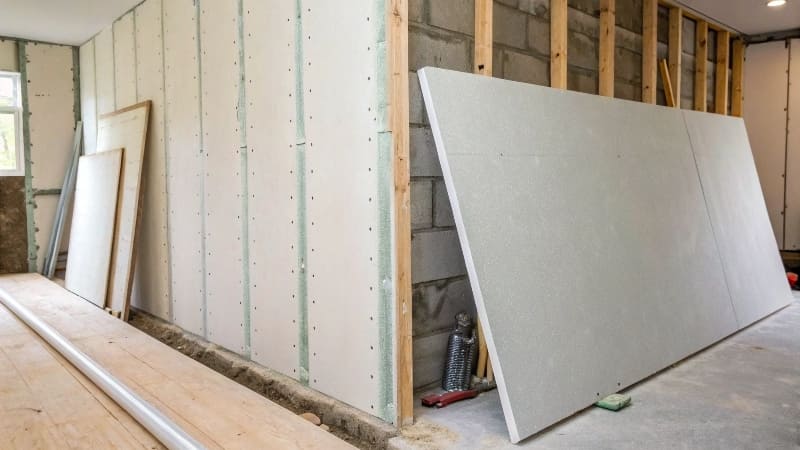
Cement board shines where water is a problem. Its low water absorption rate—below 0.2%—makes it reliable in wet areas. But its weight and toughness make cutting and mounting difficult. Installing large panels requires stronger framing and tools to handle silica dust.
Let’s compare both materials:
| Property | Fiber Cement Board | Drywall (Gypsum Board) |
|---|---|---|
| Density | High (15–18 kg/m²) | Medium (8–10 kg/m²) |
| Water Resistance | Excellent | Poor |
| Fire Resistance | A1 Rated Non-combustible | B Rated Fire-resistant |
| Impact Strength | High | Medium |
| Surface Smoothness | Hard to finish | Easy to paint and decorate |
| Cost | 60–80% higher | Lower |
So yes, cement board resists water better, but for dry rooms where you want a clean paint job or wallpaper finish, drywall always makes life easier.
What is a fiber cement board?
I first worked with fiber cement boards in commercial kitchens—they were tough, moisture-proof, and handled lots of wear without bending or breaking.
Fiber cement board is a dense sheet made from cement, silica sand, cellulose fibers, and additives pressed together for strength, fire safety, and durability.
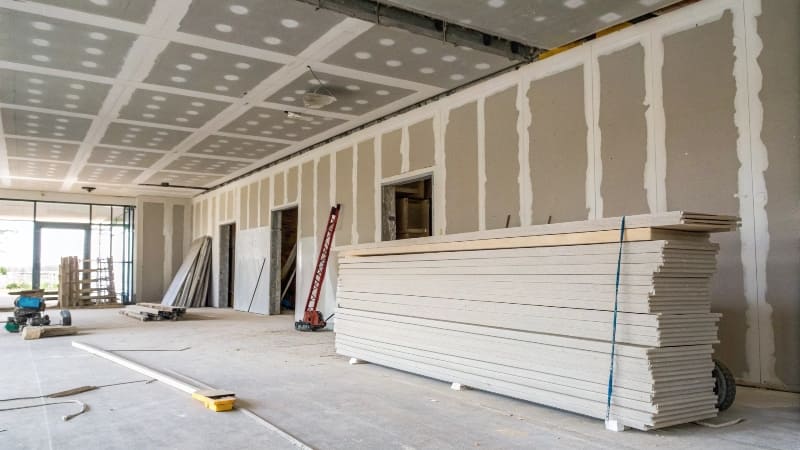
The strength of fiber cement comes from its composition. Cement gives rigidity, sand adds resistance to erosion, and fibers prevent cracking. This balance makes it the perfect choice for demanding environments.
Here’s a deeper look at its structure and function:
| Component | Purpose | Effect |
|---|---|---|
| Cement | Base structure | Provides stiffness and durability |
| Silica sand | Filler | Adds density and smooth texture |
| Cellulose fiber | Reinforcement | Prevents cracking and warping |
| Special additives | Finish enhancement | Improves fire and moisture resistance |
Its hardness, between Mohs 4–5, makes it far less flexible than gypsum boards. That’s great for walls exposed to mechanical impact but limits decorative flexibility. For smooth finishes or curved surfaces, gypsum is easier to work with.
Is fiber cement board good for ceilings?
Many assume fiber cement boards can be used anywhere, even on ceilings. But that’s not always a safe or practical choice.
Fiber cement board can be used for ceilings only in specific conditions—especially when moisture or fire protection is critical.
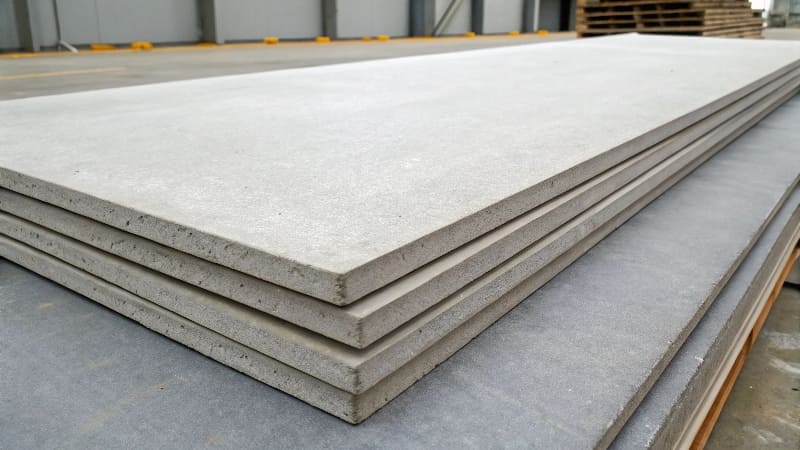
I once supervised a ceiling installation in a spa room using fiber cement panels. They held up perfectly against steam but needed reinforced supports because of their weight, which is about three times that of drywall panels.
Here’s how it compares in ceiling performance:
| Feature | Fiber Cement Board | Gypsum Board |
|---|---|---|
| Moisture Resistance | Excellent | Moderate |
| Fire Safety | A1 non-combustible | B class fire-resistant |
| Acoustic Performance | Poor (NRC 0.05–0.1) | Good (NRC 0.5–0.9) |
| Weight | Heavy | Lightweight |
| Seismic Flexibility | Low | Better flexibility |
Fiber cement ceilings are best for kitchens, bathrooms, and outdoor covered spaces. For general interiors or places needing good acoustics, drywall or acoustic gypsum panels are more suitable. If you want a middle ground, moisture-resistant “green” gypsum boards offer decent humidity protection at 60% of fiber cement’s cost.
Conclusion
Fiber cement boards offer moisture and fire resistance far beyond drywall but require extra labor, support, and cost. Use drywall for easy finishes, and reserve cement boards for harsh environments.
