




Is Cement Sheet Structural?
Cement sheet is semi‑structural but not a primary load‑bearing element. It provides surface strength, stability, and rigidity but is designed to act as a substrate layer, not to carry major building loads.
TRUSUS construction insight: cement sheet supports, stabilizes, and connects—but does not bear full structural weight.
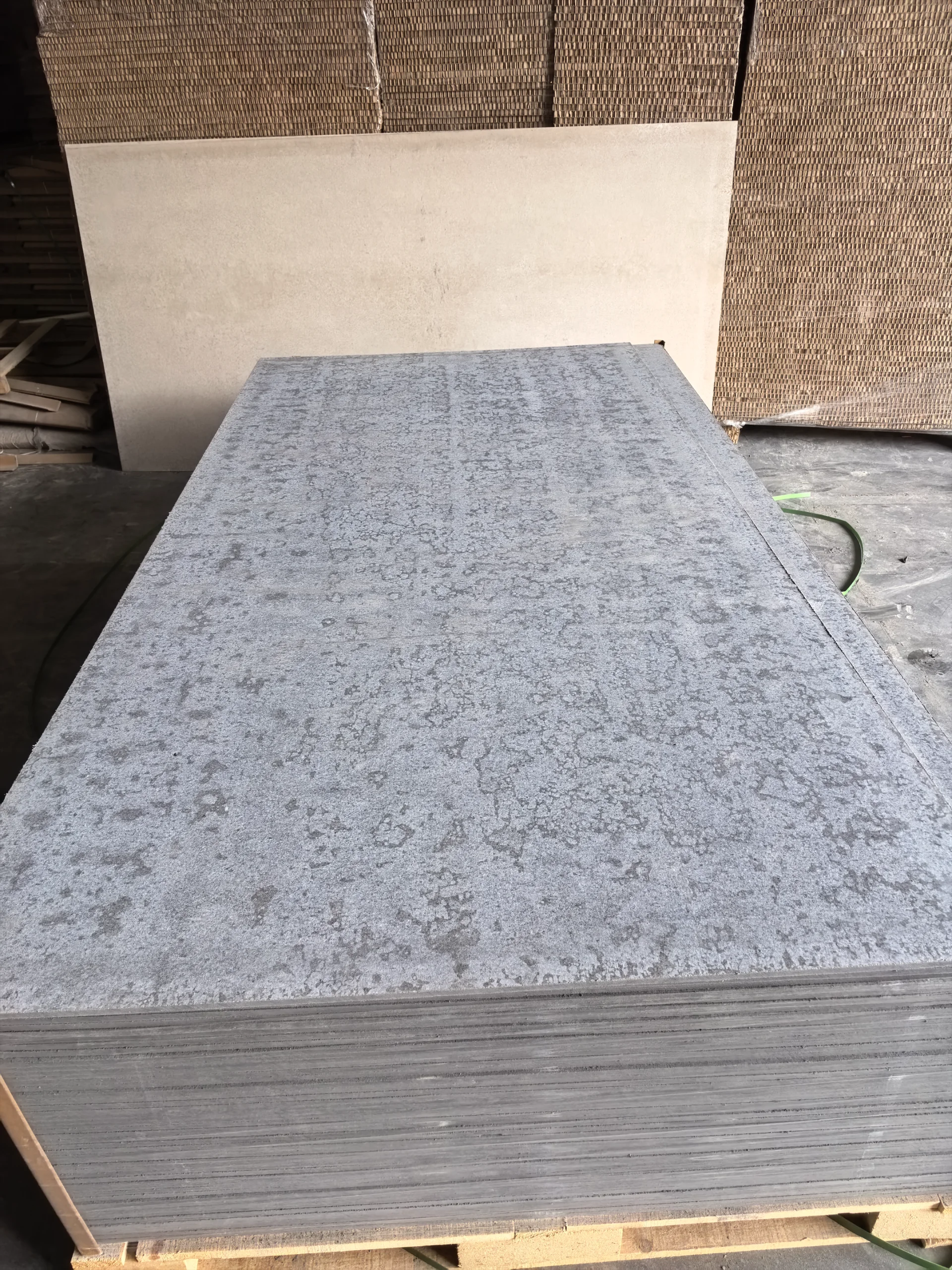
Its stiffness and density make it an ideal intermediate layer for floors, walls, and façades that require durability without adding heavy structural burden.
Can You Put Cement Board Over Underfloor Heating?
Yes, cement board can be installed over underfloor heating systems. It gives a stable surface for tile or other floor finishes and allows consistent heat transmission from heating pipes or mats below.
TRUSUS installation insight: cement board becomes a balanced bridge—solid enough to hold finishes, yet conductive enough to move warmth upward.
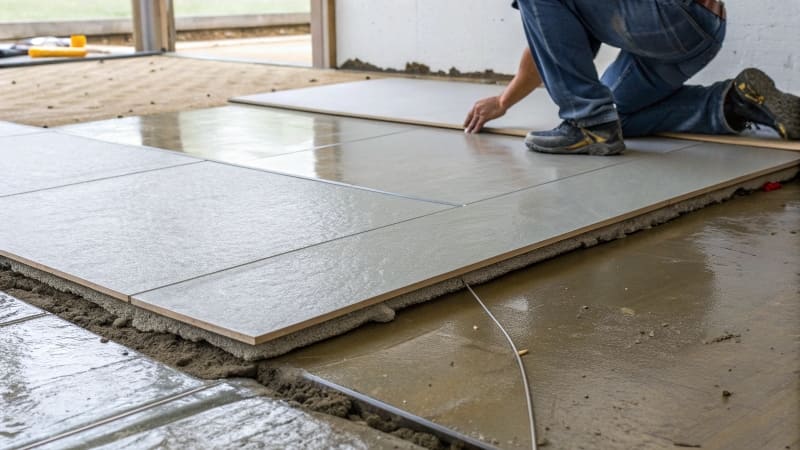
Installation Conditions
| Step | Key Parameter | Purpose |
|---|---|---|
| 1 | Ensure heating pipes or cables secured | Prevent movement |
| 2 | Lay thin flexible adhesive layer | Maintain contact |
| 3 | Install cement board with screws | Stability and alignment |
| 4 | Seal joints with mesh and mortar | Prevent expansion cracks |
| 5 | Overlay floor finish | Complete thermal path |
The board’s dimensional stability protects the heating layout from deformation and guarantees even surface temperature across large floor areas.
Is Cement Board Good for Underfloor Heating?
Cement board is ideal for underfloor heating systems because it is heat‑resistant, moisture‑tolerant, and dimensionally consistent. It balances heat distribution and prevents floor movement caused by thermal cycles.
TRUSUS material insight: this board doesn’t fight the heat—it works with it.
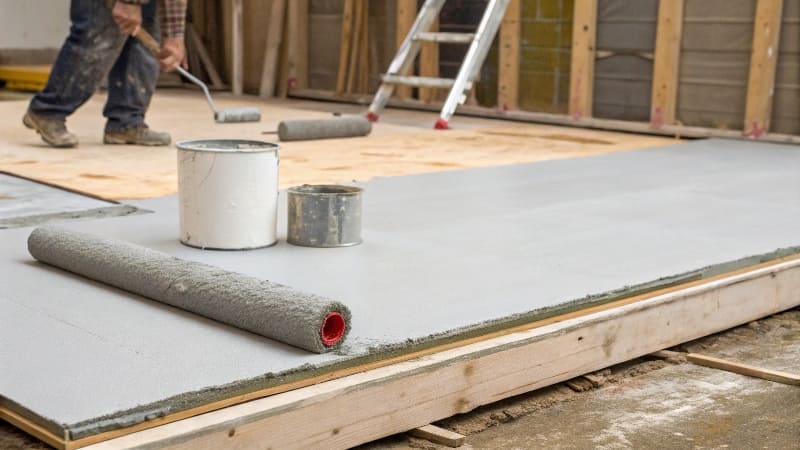
Performance Matrix
| Property | Advantage | Benefit to Heating System |
|---|---|---|
| Thermal Stability | Withstands long‑term heat exposure | No warping or delamination |
| Conductivity | Moderate thermal transfer | Even heat spread |
| Moisture Resistance | No swelling or decay | Reliable performance in humid rooms |
| Dimensional Accuracy | Low expansion | Tight installation tolerances |
| Surface Strength | Excellent bonding for tile finishes | Longer lifespan |
These properties make it one of the most reliable substrates for radiant heating, especially in kitchens and bathrooms where moisture and temperature vary constantly.
Does Cement Board Stop Heat Transfer?
No, cement board does not stop heat transfer. It allows controlled thermal conduction—enough to move energy smoothly toward the surface while avoiding localized overheating or uneven temperature zones.
TRUSUS energy insight: cement board doesn’t block heat—it regulates it.
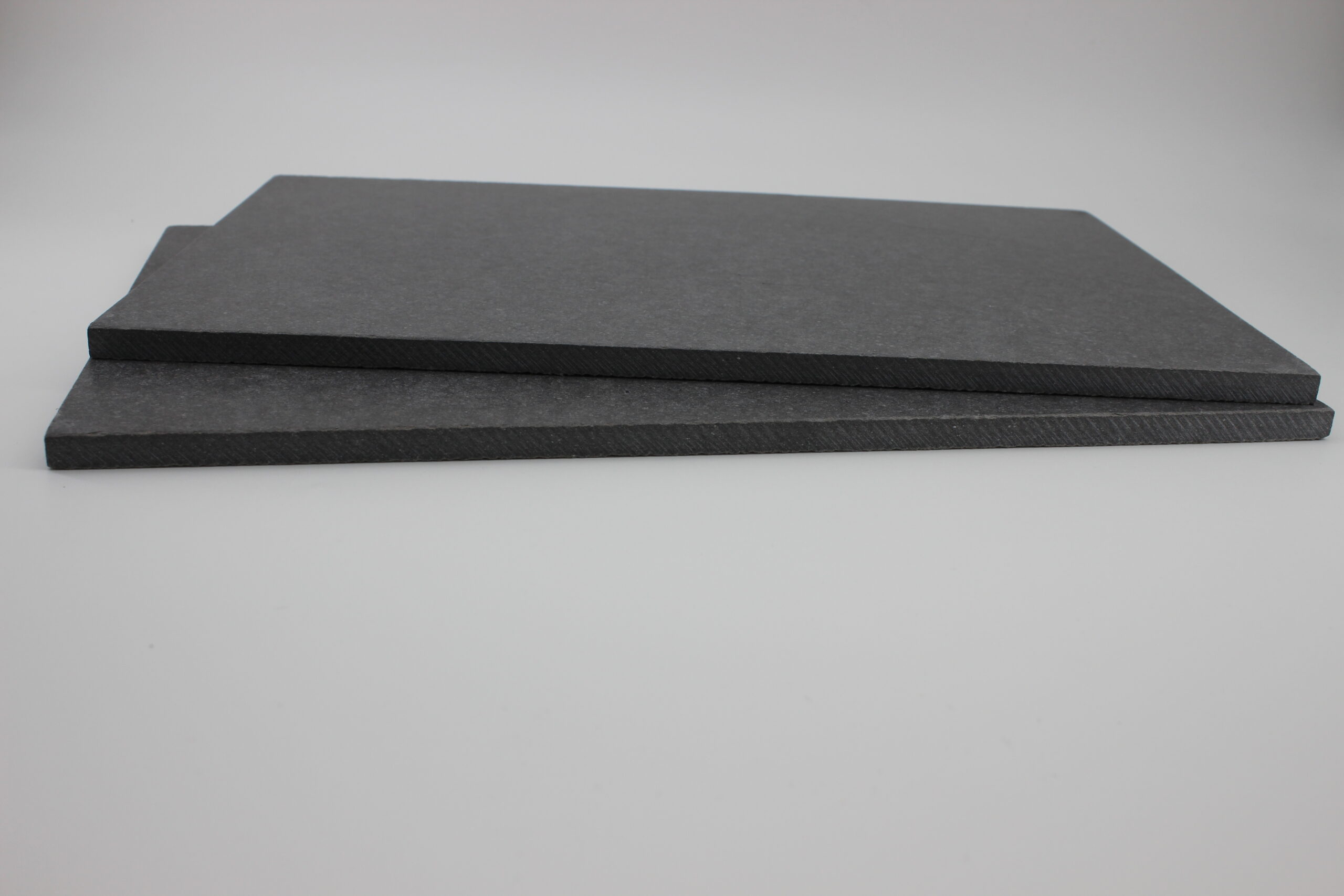
Heat Flow Summary
| Feature | Function | Impact on System |
|---|---|---|
| Mineral Density | Creates uniform thermal path | Prevents hot spots |
| Balanced Conductivity | Allows efficient upward heat flow | Maximizes comfort |
| Thermal Mass | Stores and releases heat slowly | Energy efficiency |
| Interface Compatibility | Bonds well with adhesives | Seamless floor integration |
Cement board becomes a “thermal mediator”—it stabilizes heat rather than isolating it, improving overall comfort and energy performance.
Conclusion
At TRUSUS, I see cement board as more than a rigid panel—it’s a system layer that links strength and energy efficiency. Used over underfloor heating, it enhances thermal stability, durability, and indoor comfort, turning a simple base material into a key component of sustainable building design.
