




How to Waterproof a Mezzanine Floor Made of Fiber Cement Board?
Waterproof a fiber cement board mezzanine floor using primer sealant followed by liquid membrane waterproofing system applied in two coats, sealed joints with polyurethane sealant, protective screed layer, and proper drainage slopes of 1:100 minimum, with additional vapor barrier underneath boards and perimeter flashing details to prevent moisture ingress from below and edges.
Primer sealant penetrates fiber cement surface creating sealed substrate for waterproofing adhesion. Liquid membrane systems provide seamless waterproof barrier applied in multiple thin coats with reinforcement fabric at joints and penetrations. Joint sealing uses polyurethane sealant at board interfaces preventing water penetration through construction gaps. Protective screed over waterproof membrane provides impact resistance and wearing surface. Drainage design with minimum 1:100 slopes ensures water removal to designated outlets.
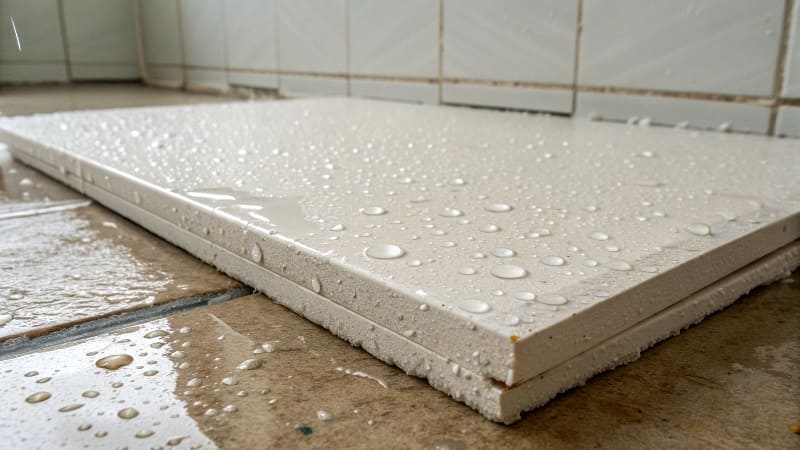
From my extensive experience with cement board systems, I've learned that successful waterproofing depends on treating the entire floor as an integrated system rather than just surface coating.
What Are the Safety Regulations for Modular Mezzanine Floors in Guyana?
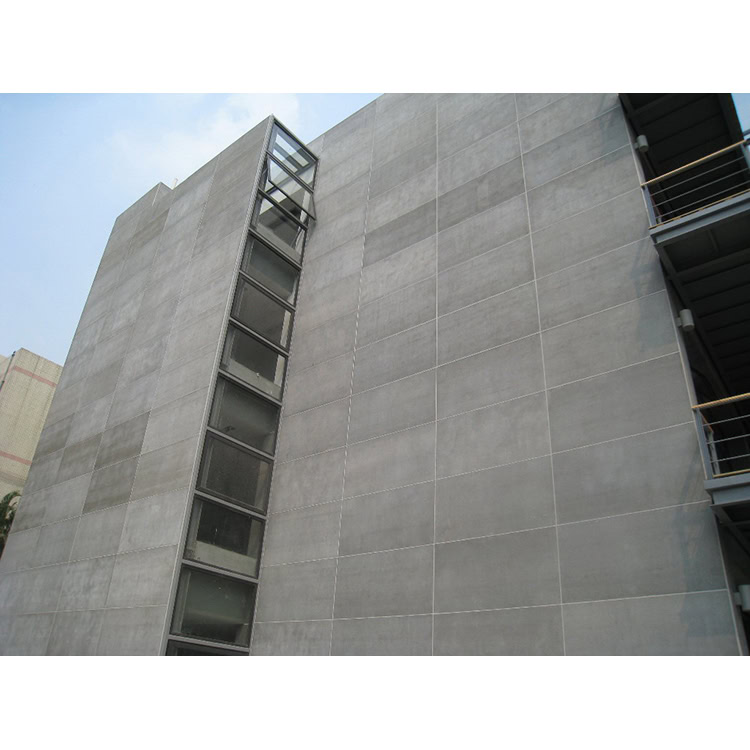
Safety regulations for modular mezzanine floors in Guyana follow Caribbean building standards requiring minimum 4kN/m² live load capacity, structural engineering certification for floors above 600mm height, guardrails 1.1m minimum height with maximum 125mm spacing, emergency egress routes, and compliance with local fire safety codes including sprinkler systems for areas exceeding 500m² floor area.
Structural load requirements mandate minimum 4kN/m² live loads for general storage with higher ratings for specific applications. Engineering certification required for mezzanine floors above 600mm height from licensed structural engineer. Guardrail specifications require 1.1m minimum height with balusters spaced maximum 125mm apart and handrail load capacity of 0.9kN/m. Emergency egress must provide two independent routes for floors exceeding 90m² with maximum travel distance of 30m to exits. Fire safety compliance includes sprinkler coverage for areas over 500m² and fire-rated construction for structural elements.
Structural Safety Requirements
Load capacity and engineering standards for mezzanine floor construction in Guyana.
| Safety Aspect | Minimum Requirement | Design Standard | Certification | Penalty for Non-compliance |
|---|---|---|---|---|
| Live Load Capacity | 4.0kN/m² | General storage | Structural engineer | Building closure |
| Dead Load Factor | 1.2 x actual | Material weight | Certified calculation | Legal liability |
| Deflection Limit | L/250 under load | Serviceability | Professional engineer | Occupancy restriction |
| Vibration Control | No perceptible | Human comfort | Dynamic analysis | User complaints |
| Safety Factor | 2.5:1 minimum | Ultimate strength | Code compliance | Insurance void |
Professional engineering certification required for all mezzanine structures.
Guardrail and Fall Protection
Safety barrier requirements for elevated mezzanine floors and working platforms.
| Protection Element | Specification | Height Requirement | Load Rating | Installation Standard |
|---|---|---|---|---|
| Top Rail | 1.1m minimum | Fixed height | 0.9kN/m horizontal | Continuous support |
| Mid Rail | 550mm height | ±25mm tolerance | 0.45kN/m horizontal | Intermediate posts |
| Balusters | 125mm max spacing | Full height | Individual strength | Secure attachment |
| Toe Board | 100mm minimum | Floor level | Kick load resistance | Gap prevention |
| Gate Systems | Self-closing | Match rail height | Same as fixed rail | Safety latching |
Guardrail systems must resist specified loads without permanent deformation.
Emergency Egress Requirements
Evacuation and access standards for mezzanine floor safety in commercial buildings.
| Egress Element | Requirement | Calculation Method | Safety Factor | Code Reference |
|---|---|---|---|---|
| Exit Width | 800mm minimum per route | Occupant load ÷ 60 | Two independent routes | IBC Section 1005 |
| Travel Distance | 30m maximum | Furthest point to exit | 50% reduction factor | IBC Section 1017 |
| Stair Width | 1100mm minimum | Occupant capacity | Handrail both sides | IBC Section 1011 |
| Landing Size | Door width + 300mm | Swing clearance | Non-slip surface | IBC Section 1010 |
| Lighting Level | 10 lux minimum | Emergency backup | Battery operation | IBC Section 1008 |
Two independent exit routes required for areas exceeding 90m².
How to Finish the Edges of a Cement Board Floor for a Professional Look?
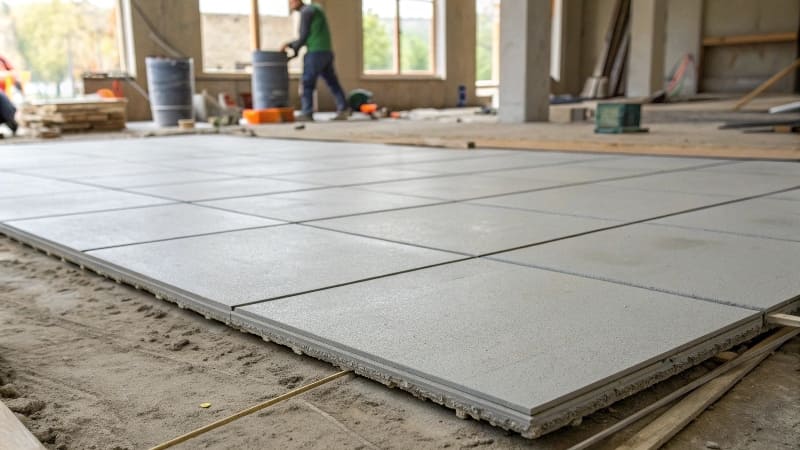
Finish cement board floor edges professionally using aluminum angle trim with adhesive and mechanical fastening, PVC edge strips with color-matched sealant, or integrated perimeter channels that accommodate thermal expansion while providing clean visual termination, with options including metal nosing profiles, rubber edge guards, or custom millwork depending on aesthetic requirements and traffic levels.
Aluminum angle trim provides durable edge protection with professional appearance secured using construction adhesive and mechanical fasteners. PVC edge strips offer flexible installation with color matching options and sealant integration for moisture protection. Perimeter channels accommodate thermal movement while maintaining clean lines and preventing edge damage. Metal nosing profiles deliver high-traffic durability with anti-slip features for safety compliance. Custom millwork solutions provide architectural integration with surrounding finishes and design continuity.
Edge Finishing Methods by Application
Different edge treatment approaches based on usage and aesthetic requirements.
| Finishing Method | Durability Rating | Cost Factor | Installation Complexity | Best Application |
|---|---|---|---|---|
| Aluminum Angle | Excellent | Medium | Moderate | Commercial/Industrial |
| PVC Edge Strip | Good | Low | Simple | Residential/Light commercial |
| Metal Nosing | Excellent | High | Complex | High-traffic areas |
| Rubber Guard | Very Good | Low | Simple | Warehouse/Storage |
| Custom Millwork | Variable | Very High | Complex | Architectural projects |
Metal nosing provides best durability for high-traffic applications.
Installation Details and Specifications
Technical specifications for professional edge finishing installation.
| Detail Aspect | Aluminum System | PVC System | Metal Nosing | Quality Standard |
|---|---|---|---|---|
| Fastener Spacing | 300mm centers | 400mm centers | 200mm centers | No visible deflection |
| Adhesive Type | Structural polyurethane | Construction adhesive | Epoxy system | Permanent bond |
| Sealant Application | Perimeter seal only | Full joint sealing | Weather seal | Water-tight |
| Thermal Accommodation | 3mm expansion gap | 2mm expansion gap | 5mm expansion gap | No buckling |
| Finish Options | Mill/Anodized/Powder | Color-matched/Textured | Stainless/Brass/Bronze | Coordinated appearance |
Proper sealant application critical for moisture protection and appearance.
Aesthetic Integration Strategies
Methods to integrate edge treatments with overall design and adjacent finishes.
| Integration Method | Design Impact | Cost Implication | Maintenance Requirement | Longevity |
|---|---|---|---|---|
| Flush Mounting | Seamless appearance | Medium cost | Low maintenance | 15+ years |
| Proud Installation | Defined edge | Lower cost | Moderate maintenance | 10-15 years |
| Recessed System | Clean lines | Higher cost | Low maintenance | 20+ years |
| Overlay Method | Surface protection | Medium cost | Higher maintenance | 10-12 years |
Recessed systems provide longest service life with best appearance.
Is High-Density Cement Board Strong Enough for Heavy Pallet Storage?
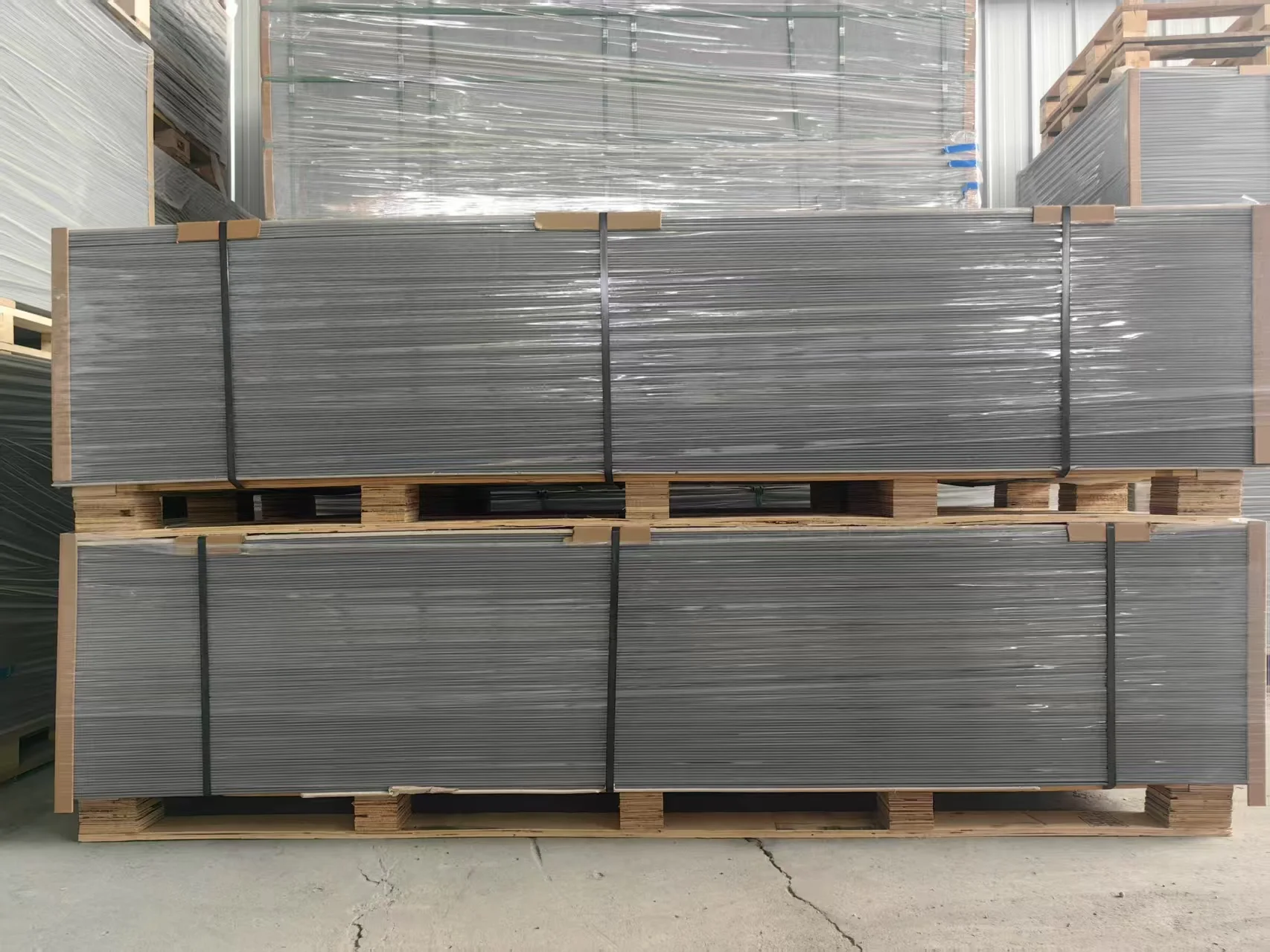
High-density cement board with minimum 1200kg/m³ density and 25MPa compressive strength is strong enough for heavy pallet storage when properly supported on 600mm centers with appropriate substructure, handling point loads up to 2500kg per square meter with proper load distribution plates, meeting warehouse storage requirements for most industrial applications.
High-density cement boards with 1200kg/m³ minimum density provide adequate strength for pallet storage applications with proper support systems. Compressive strength of 25MPa minimum handles concentrated loads from pallet feet and forklift traffic. Support spacing at 600mm centers maximum prevents excessive deflection and ensures load distribution. Point load capacity reaches 2500kg/m² with load distribution plates under heavy pallets. Substructure design must accommodate dynamic loads from material handling equipment.
Load Capacity Analysis
Structural performance of high-density cement board under warehouse loading conditions.
| Load Scenario | Board Density | Support Spacing | Max Load | Safety Factor | Application Suitability |
|---|---|---|---|---|---|
| Light Storage | 1000kg/m³ | 800mm | 1500kg/m² | 3:1 | General warehouse |
| Medium Storage | 1200kg/m³ | 600mm | 2000kg/m² | 2.5:1 | Standard pallets |
| Heavy Storage | 1400kg/m³ | 400mm | 2500kg/m² | 2:1 | Heavy industrial |
| Maximum Loading | 1600kg/m³ | 300mm | 3000kg/m² | 1.8:1 | Specialized storage |
1200kg/m³ density boards handle most warehouse applications safely.
Support System Requirements
Substructure specifications for cement board pallet storage applications.
| Support Element | Specification | Spacing | Load Rating | Installation Requirement |
|---|---|---|---|---|
| Primary Beams | Steel C150x1.5mm | 2400mm centers | 15kN/m | Engineered connections |
| Secondary Joists | Steel C100x1.2mm | 600mm centers | 8kN/m | Continuous support |
| Board Fastening | Self-drilling screws | 300mm centers | Pull-out resistance | Pre-drilled holes |
| Load Distribution | Steel plates | Under pallets | Point load spread | Minimum 500x500mm |
Continuous secondary support at 600mm spacing essential for heavy loading.
Dynamic Load Considerations
Impact of material handling equipment on cement board floor systems.
| Equipment Type | Dynamic Factor | Floor Impact | Design Consideration | Protection Method |
|---|---|---|---|---|
| Hand Pallet Jack | 1.2x static | Light impact | Standard design | None required |
| Electric Pallet Jack | 1.5x static | Moderate impact | Enhanced fastening | Edge protection |
| Counterbalance Forklift | 2.0x static | Heavy impact | Reinforced support | Impact plates |
| Reach Truck | 1.8x static | Point loading | Concentrated support | Load distribution |
| Order Picker | 1.6x static | Wheel loading | Continuous surface | Surface hardener |
Forklift operations require enhanced floor design and protection systems.
Long-term Performance Factors
Considerations for sustained heavy loading and warehouse environment conditions.
| Performance Factor | Impact Level | Mitigation Strategy | Monitoring Requirement | Service Life |
|---|---|---|---|---|
| Creep Deformation | Moderate | Proper support spacing | Annual inspection | 15-20 years |
| Moisture Absorption | Low | Sealed surface | Quarterly check | 20+ years |
| Abrasion Resistance | High | Surface hardener | Monthly visual | 10-15 years |
| Impact Damage | Variable | Protective systems | After incidents | Repairable |
| Joint Movement | Low | Flexible sealants | Semi-annual | 15-20 years |
Proper maintenance extends service life significantly in warehouse environments.
Conclusion
Waterproof fiber cement mezzanine floors using primer sealant followed by liquid membrane waterproofing in two coats with sealed joints, protective screed, and proper drainage slopes of 1:100 minimum. Safety regulations for modular mezzanine floors in Guyana require minimum 4kN/m² live load, structural engineering certification for floors above 600mm, guardrails 1.1m height with 125mm maximum spacing, and emergency egress routes. Professional edge finishing uses aluminum angle trim, PVC edge strips, or integrated perimeter channels with proper fastening and sealant application for moisture protection and clean appearance. High-density cement board with minimum 1200kg/m³ density and 25MPa compressive strength handles heavy pallet storage with proper support at 600mm centers and load distribution plates for point loads up to 2500kg/m². Success with fiber cement board systems requires understanding that waterproofing demands complete system approach including substrate preparation and drainage design, safety compliance requires professional engineering and adherence to specific load and egress standards, edge finishing significantly impacts both performance and aesthetics requiring proper material selection, and structural capacity depends on both board properties and support system design with dynamic loading considerations, making integrated system design essential for optimal performance and safety in commercial and industrial applications.
