




How to Repair Water-Damaged Cement Siding?
To repair water‑damaged cement siding, first inspect, then dry, and finally seal the system.
Most damage comes from trapped moisture in joints or framing, not the cement board’s surface itself.
TRUSUS material insight: water exposure ends where system balance begins.
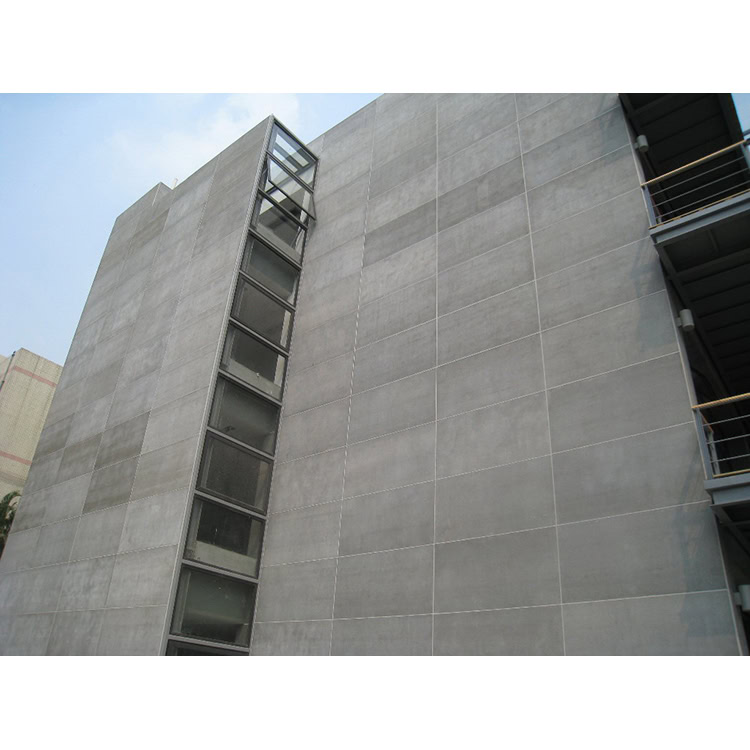
Dry the affected area completely.
Remove loose or delaminated pieces, clean the substrate, and reseal joints with high‑grade waterproof coating before repainting or refastening panels.
How to Tell If Water Damage Is Permanent?
Permanent water damage in cement siding shows as fiber breakdown, surface powdering, or layer delamination.
Temporary stains or swelling often recover after controlled drying and resealing.
TRUSUS performance insight: what looks “ruined” might only be “imbalanced.”
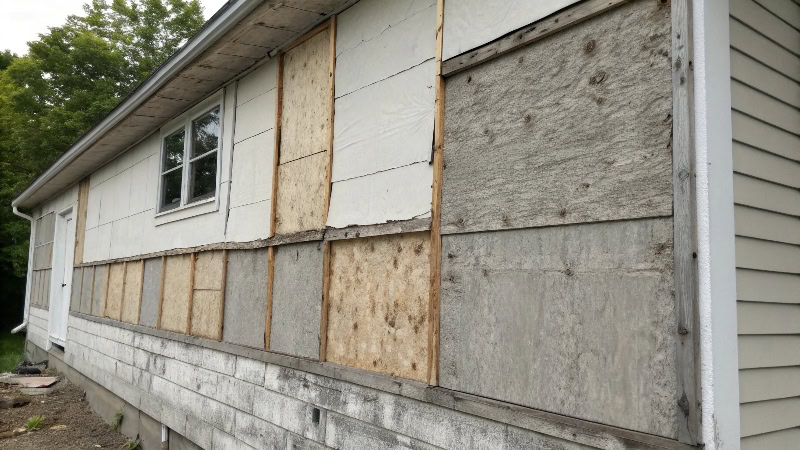
Damage Assessment Table
| Visual Indicator | Structural Meaning | Action |
|---|---|---|
| Staining only | Surface moisture | Dry and repaint |
| Minor swelling | Temporary absorption | Air dry + seal |
| Powdering texture | Fiber loss | Replace section |
| Edge separation | Delamination | Replace and re‑fasten |
| Crumbling core | Full failure | Replace entirely |
Over time, I learned to inspect not the color change but the integrity of fiber structure.
If the board’s density still feels solid, the system is often recoverable.
Can Fiber Cement Siding Be Repaired?
Yes, fiber cement siding is highly repairable because its structure resists permanent deformation.
Most issues come from system gaps rather than material disintegration.
TRUSUS system insight: good siding fails at boundaries, not at its core.
Fiber Cement Repair Framework
| Step | Description | Expected Outcome |
|---|---|---|
| 1 | Remove damaged panel sections | Limit spread of cracks |
| 2 | Dry and clean sub‑layer | Prevent trap moisture |
| 3 | Replace or reseal | Restore continuous surface |
| 4 | Apply primer and exterior paint | Protect fibers from rehydration |
| 5 | Reinforce joints | Improve future resistance |
Every repaired wall reflects the same principle—restore the barrier, not just the panel.
Resealing edges and screws matters more than board replacement itself.
How to Fix Cement Siding After a Flood?
After a flood, assess and dehumidify slowly before deciding on replacement.
Flood damage often impacts framing and cavity moisture before the cement layer fails.
TRUSUS recovery insight: flood repair starts with patience, not demolition.
Flood Recovery Process
| Phase | Task | Purpose |
|---|---|---|
| Inspection | Check for loosened fasteners and swelling | Identify stress zones |
| Drying | Use air blowers, avoid forced heat | Prevent cracking |
| Cleaning | Remove mud, salts, and contaminants | Restore finish |
| Sealing | Apply water‑resistant coating | Strengthen surface |
| Testing | Measure moisture content (below 15%) | Validate stability before painting |
These steps convert disaster into resilience.
I’ve seen many buildings recover fully when drying and sealing were done systematically.
Conclusion
At TRUSUS, I believe water damage is not failure—it’s a stress test for system clarity.
A cement panel’s true strength shows in its recovery, not its resistance alone.
