




How to Cut Cement Board Cleanly?
To cut cement board cleanly, score the surface with a carbide-tipped knife and snap along the line. For thicker boards, use a circular saw with a carbide or diamond blade and proper dust control.
TRUSUS insight: clean cutting starts with the right tool, not more force.
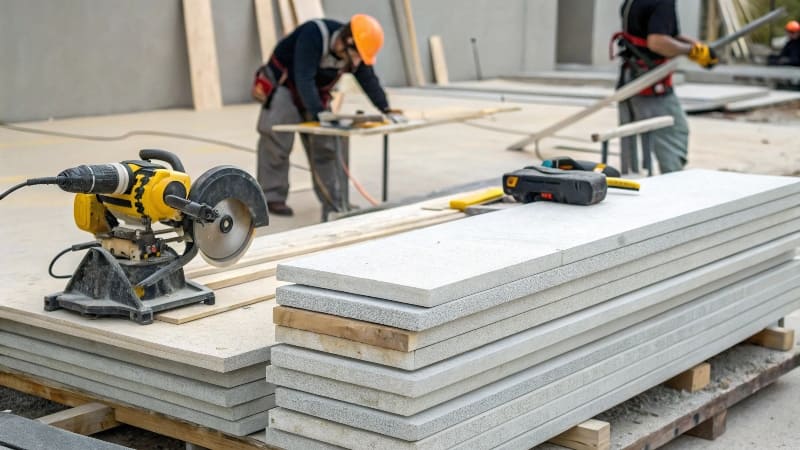
When using power tools, wear protective equipment and connect a vacuum for dust removal. Smooth the edges with sandpaper or a masonry file before installation to prevent uneven joints.
How Are You Supposed to Cut Cement Board?
You’re supposed to cut cement board with a score-and-snap method for thin panels or a power saw for dense or double-layer boards. Always support the board evenly while cutting to avoid chipping.
installation insight: precision means control, not speed.
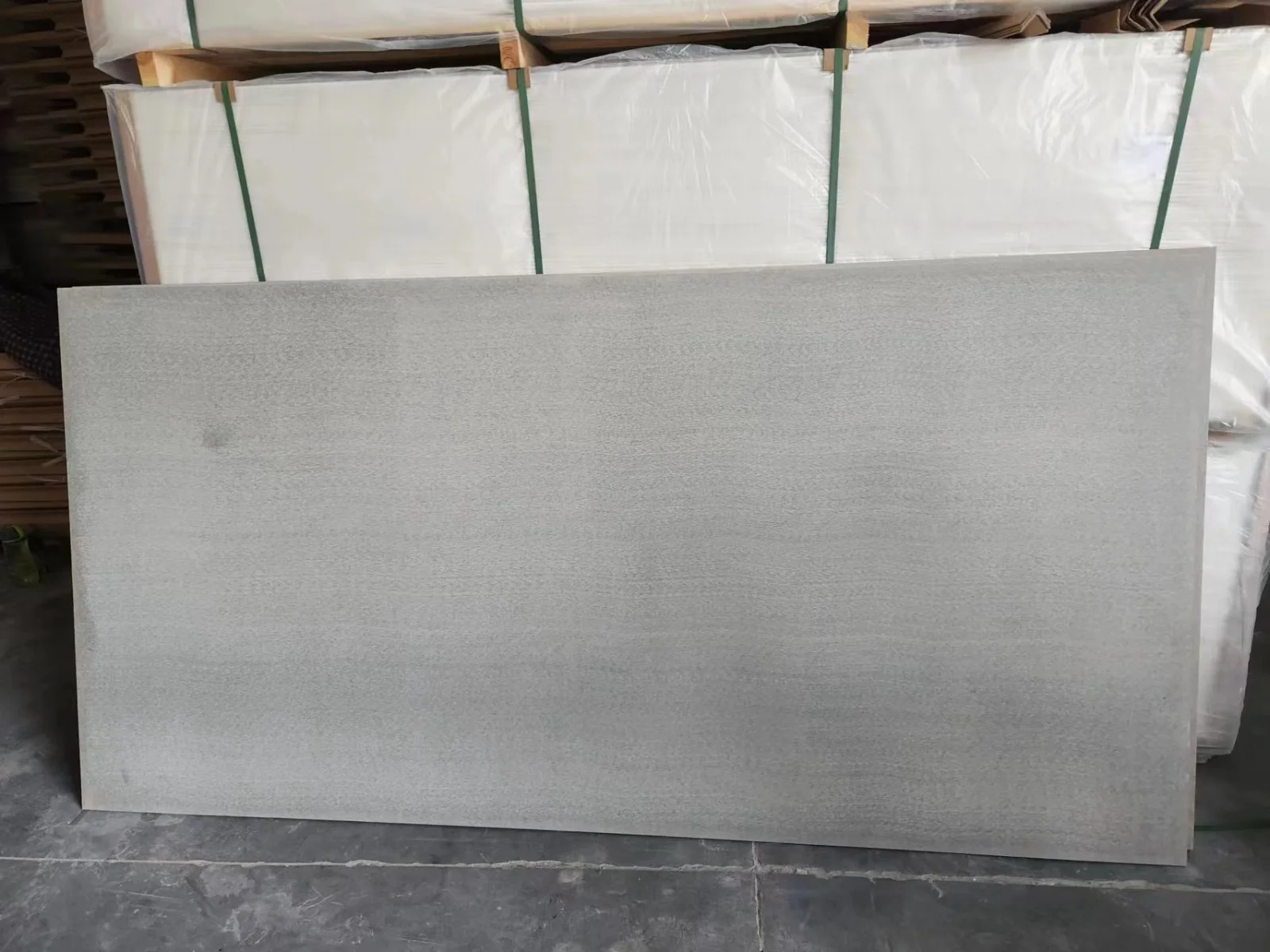
Cement Board Cutting Comparison
| Cutting Tool | Recommended Thickness | Cut Quality | Dust Emission | Notes |
|---|---|---|---|---|
| Carbide Scoring Knife | Up to 6 mm | Clean edge | Low | Best for small projects |
| Circular Saw + Carbide Blade | 6–12 mm | Very clean | High | Use dust mask and vacuum |
| Jigsaw + Diamond Blade | 6–12 mm | Precise curves | Moderate | Ideal for detail work |
| Angle Grinder | 8+ mm | Rough edge | High | For quick rough cuts |
Even clean cuts depend on board handling—lay flat, mark clearly, and avoid bending during snapping to maintain internal fiber integrity.
How Far Should Screws Be on Cement Board?
Screws should be spaced about 200 mm (8 inches) apart on the field area and 100 mm (4 inches) from the edge of the board. This spacing prevents flexing and ensures load distribution.
fastening insight: every screw carries part of the board’s balance.
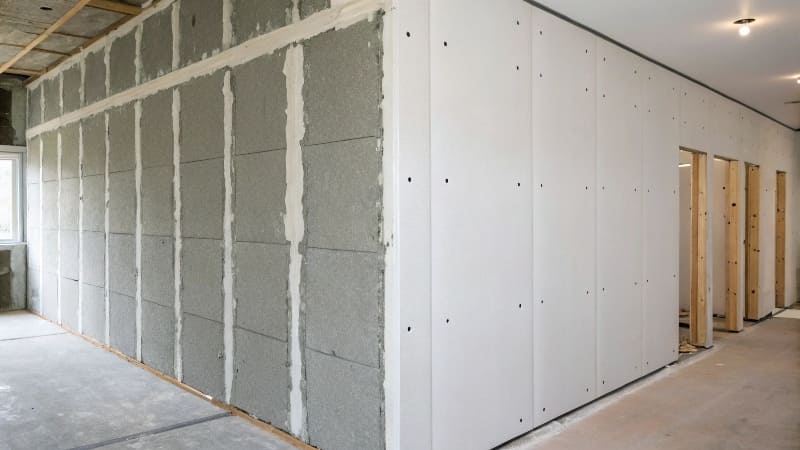
Cement Board Screw Placement Guide
| Area | Screw Spacing | Edge Margin | Screw Type | Tip |
|---|---|---|---|---|
| Center Area | 200 mm | 15 mm from edge | Cement board screw | Maintain flat alignment |
| Edges & Joints | 100 mm | 10–15 mm | Corrosion-resistant screw | Avoid over-tightening |
| Corners | 75 mm | From both sides | Self-tapping or coated | Prevent cracking |
Correct spacing ensures mechanical integrity and prevents bulging when boards expand. Always use screws designed for cement-based panels—ordinary drywall screws may rust or pull out.
Are Cement Board Screws Self-Tapping?
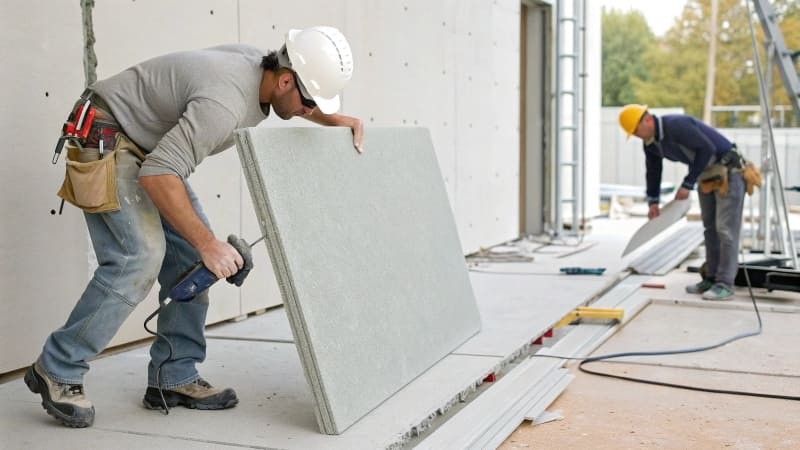
Yes, cement board screws are self-tapping and feature a ribbed head design for flush seating into hard surfaces. They drill through cement composite layers without pre-drilling.
material insight: self-tapping means precision built into every turn.
Screw Technology Overview
| Screw Type | Head Design | Thread Pattern | Function |
|---|---|---|---|
| Self-Tapping Cement Board | Ribbed Flat Head | Coarse Threads | Easy penetration, tight hold |
| Fiber-Cement Fastener | Wing Tip Head | Dual Thread | Prevents board blowout |
| Stainless Steel Screw | Pan Head | Fine Thread | Corrosion resistant |
| Standard Drywall Screw | Bugle Head | Standard Thread | Not suitable for cement board |
Use 25–45 mm long screws based on board thickness. Tighten until flush—no countersinking or excessive torque, as that may damage the surface layer.
Conclusion
Clean cutting and precise fastening turn cement board installation into craftsmanship. At TRUSUS, I see it not as just working with hard material, but refining a system—a culture of accuracy that builds lasting structures through thoughtful detail.
