




Can you use fibre cement board for flooring?
Fibre cement board is strong and moisture-resistant, but can it really work as a flooring material in daily use?
Yes, fibre cement board can be used for flooring, especially as an underlayment over wood or concrete. Its strength, moisture resistance, and stability make it popular in wet area flooring projects.
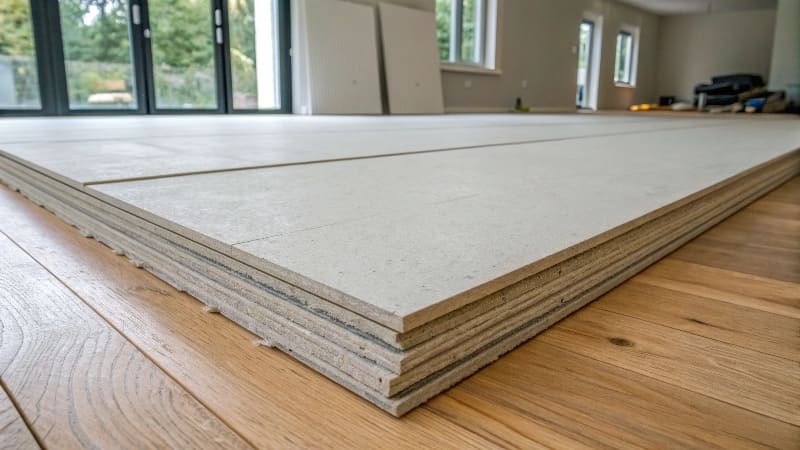
From my own work in construction materials, I have seen fibre cement boards successfully used for subfloors in bathrooms, kitchens, and even outdoor patios. However, whether it is the best choice for you depends on your exact needs. The key is to understand both its strengths and limitations before making a decision.
What are the disadvantages of fibre cement board?
If fibre cement boards are strong and practical, what could possibly hold them back?
The main disadvantages are high weight, difficult cutting, higher installation cost, and the need for special tools and handling to prevent cracking.
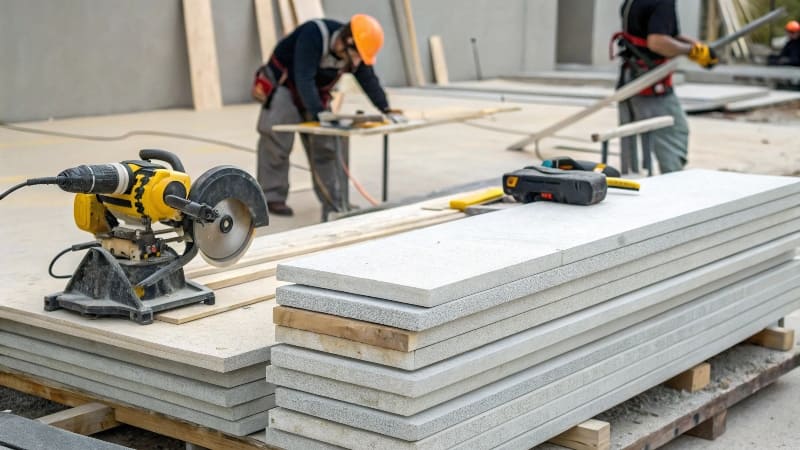
From a technical perspective, fibre cement boards are heavier than plywood or OSB. This makes them harder to transport and lift into place. They also require carbide-tipped tools for cutting, and the process creates silica dust that needs safe handling with masks and ventilation. If used as a finish floor without covering, their surface feels too hard and cold for comfort. Additionally, because of their density, special screws or nails must be used, and these can increase installation time.
| Disadvantage | Impact on Project | Possible Solution |
|---|---|---|
| High weight | Increases labour effort | Use team lifting or mechanical aid |
| Difficult cutting | Slows work and increases tool wear | Use carbide-tipped tools and proper PPE |
| Higher cost | Affects overall construction budget | Use strategically in moisture-prone areas |
| Surface feel | Hard and cold underfoot | Cover with tiles, vinyl, or wood finish |
When planning a flooring project, I always weigh these factors against the board’s benefits. In many cases, it makes sense for wet area subfloors but not for entire living spaces.
Can I use cement board on the floor?
With so many products on the market, is a plain cement board a good floor choice?
Yes, cement board is widely used as an underlayment for tile floors, especially in bathrooms and kitchens, as it offers stability and water resistance.
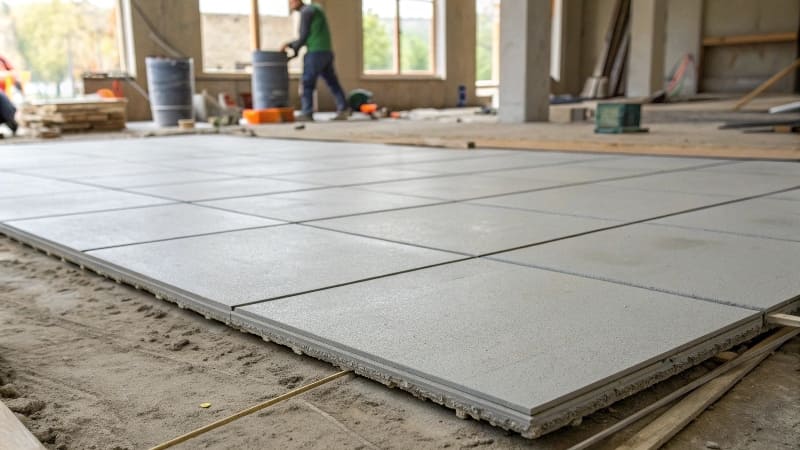
I have seen many flooring specialists replace plywood underlayment with cement board because of its better performance in wet areas. Cement board provides a firm, rigid surface that prevents tile cracking and resists moisture damage much better than wood-based materials. It is not meant to be the visible floor surface, though. Instead, it works best as a base layer under ceramic, porcelain, or stone tiles.
| Feature | Benefit | Application |
|---|---|---|
| Water resistance | Reduces risk of rot and mould | Bathrooms, kitchens |
| Dimensional stability | Prevents warping and swelling | Wet-area subfloors |
| Strength | Supports heavy tile or stone loads | Commercial floors |
| Compatibility | Works with many adhesives and mortars | Versatile installation |
Using cement board under tiles has become industry best practice, and it is something I recommend whenever the project budget allows for it.
Is fibre cement good for flooring?
If fibre cement board can be used for walls and roofs, does it also excel as a flooring material?
Fibre cement is excellent as a flooring underlayment or base in wet or outdoor areas because of its strength, moisture resistance, and dimensional stability.
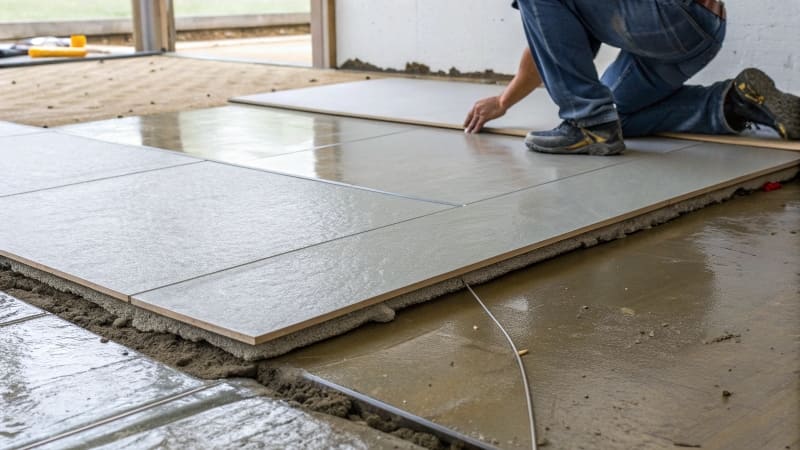
In my own practice in construction materials supply, I have provided fibre cement boards for balcony decks, shower bases, and kitchen floor rebuilds. It excels where moisture is the main concern and where you need a solid substrate. It is less suitable for floating floor systems or places where foot comfort is a priority. The key is to use it in combination with a finish material that adds style and comfort.
| Properties | Why They Matter | Best Use Cases |
|---|---|---|
| High strength | Handles weight without bending | Heavy tile or stone |
| Moisture resistance | Prevents swelling and damage | Bathrooms, balconies, kitchens |
| Pest resistance | Stops termite and insect attack | Long-term durability |
| Fire resistance | Adds safety to building | Commercial kitchens, fire-rated areas |
By matching fibre cement to the right flooring context, you can extend the life of your installation and reduce future repair needs.
Conclusion
Fibre cement board works very well as a flooring base, but not as a finished surface. Its best role is as a long-lasting, water-resistant underlayment in wet or heavy-use areas.
