




Can You Use Cement Board as a Subfloor?
Yes, cement board can be used as a subfloor layer—but only over a properly installed structural subfloor such as plywood or OSB. It acts as a stable, moisture-resistant underlayment that connects the structural base to finish materials like tile or stone. TRUSUS cement board provides load distribution, waterproofing, and dimensional stability across temperature and humidity cycles.
Cement board cannot replace a structural subfloor but serves as a transition layer between plywood base and finish materials. It prevents warping, adds strength, and resists moisture. cement board provides surface stability, long-term durability, and structural continuity in floor systems.
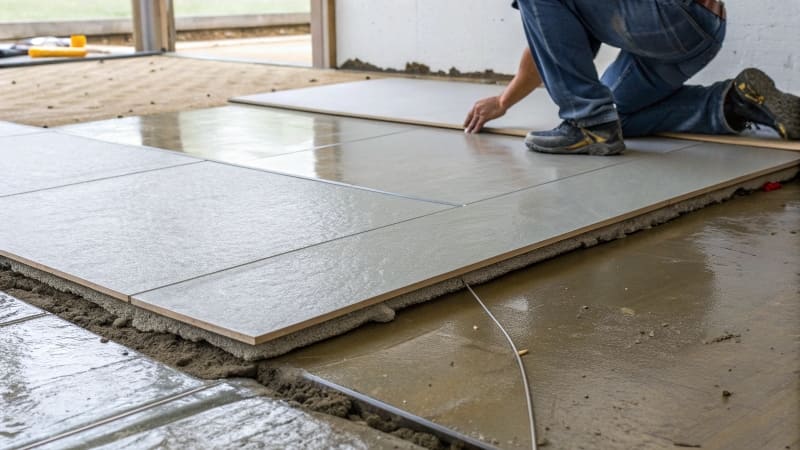
From my field experience, installing cement board on wood substrates improves tile adhesion and prevents cracks caused by substrate movement.
What Is the Most Durable Cement Board?
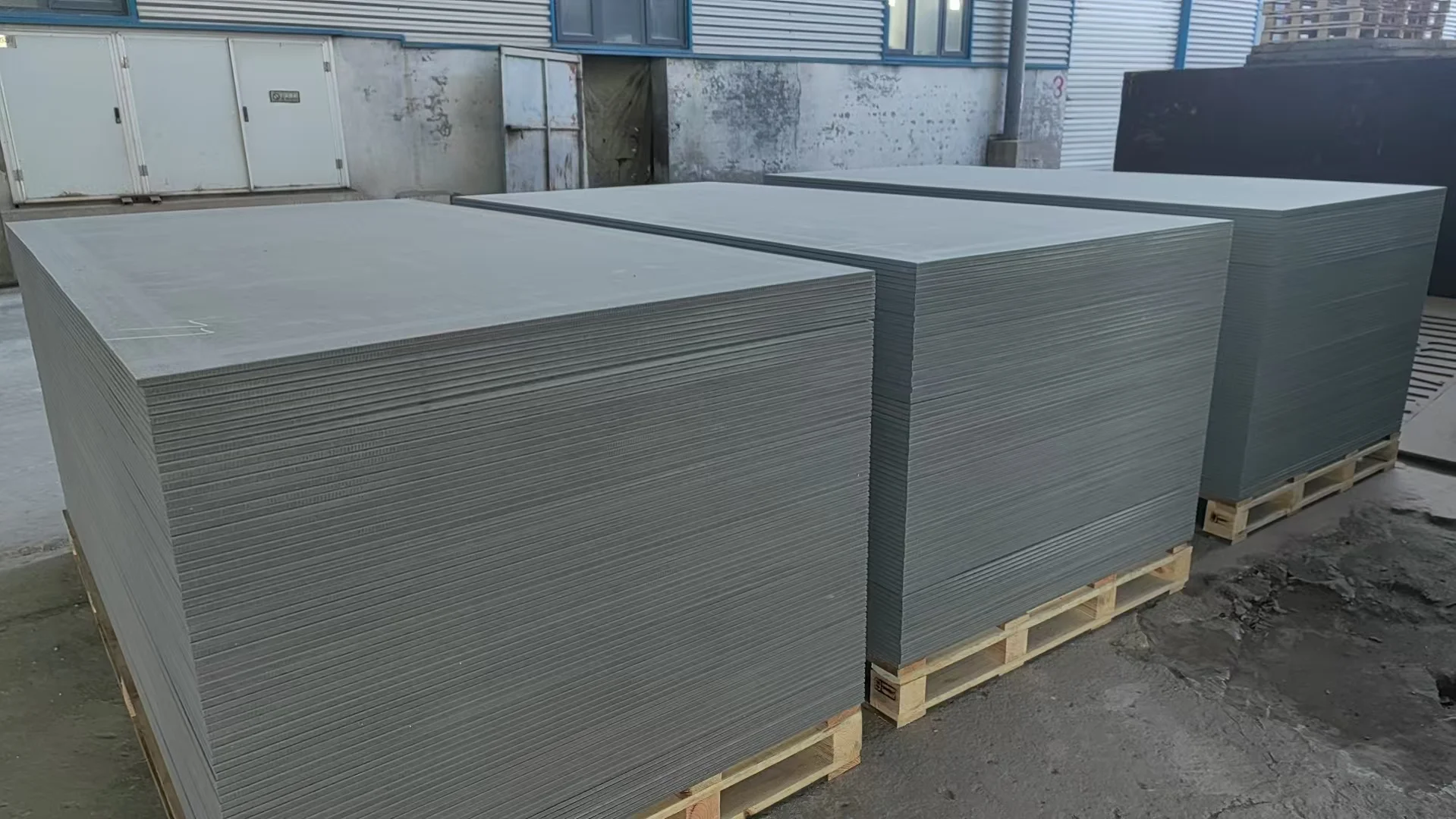
The most durable cement board is one combining high-density Portland-cement matrix with glass-fiber reinforcement and low water absorption ratio. TRUSUS Premium Fiber Cement Board, with a density above 1,250 kg/m³ and water absorption below 10%, provides superior mechanical strength, impact resistance, and long service life in both wet and dry interior applications.
High-density boards offer better compressive strength and humidity stability than standard cement backerboards. Fiber reinforcement controls micro-cracking under load. Low absorption ensures dimensional stability under wet conditions. TRUSUS Premium Board combines all three traits, making it ideal for high-traffic or moist areas.
Environmental Durability Factors
Durability varies by environmental conditions.
| Condition | Risk Factor | Protection Performance | TRUSUS Response |
|---|---|---|---|
| High humidity | Moisture degradation | Excellent | Hydrophobic matrix |
| Extreme temperature | Thermal expansion | Very good | Stable crystalline structure |
| Chemical exposure | Surface corrosion | Good | Alkaline-resistant additives |
| Heavy load impact | Structural cracking | Outstanding | Fiber reinforcement |
| Long-term aging | Density reduction | Superior | Silicate bonding |
Material composition allows durability across varied climate zones.
What Goes Between Subfloor and Cement Board?
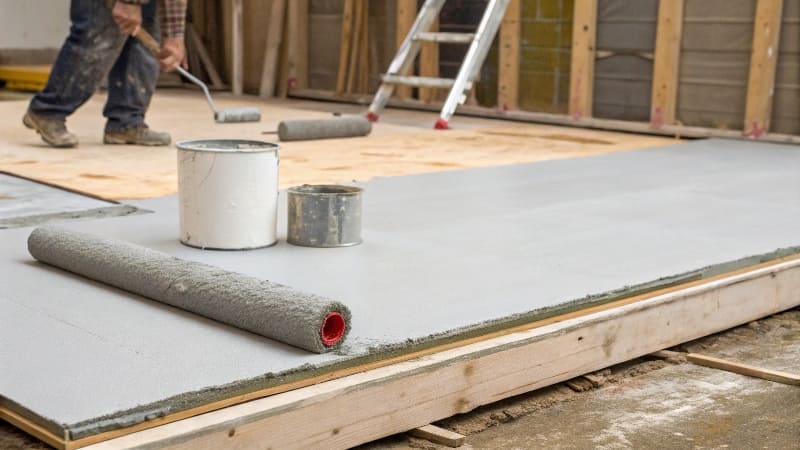
A thin layer of polymer-modified thin-set mortar spreads between subfloor and cement board to fill voids and eliminate movement. Fastening with corrosion-resistant screws or nails then secures the board. This adhesive layer ensures full contact, improves load transfer, and prevents squeaking or flexing during floor use.
Modified thin-set mortar creates uniform contact between subfloor and cement board. Corrosion-resistant fasteners maintain rigid anchoring. The bonding layer prevents voids, noise, and uneven stress distribution. TRUSUS installation system applies mortar using ¼-inch trowel, tightened screws every 200mm.
Common Installation Mistakes
Frequent installation errors to avoid.
| Mistake | Consequence | Correction |
|---|---|---|
| No thin-set used | Voids, noise, poor bonding | Always use mortar |
| Improper screw spacing | Board flex, cracked tile | Maintain 200mm grid |
| Gaps unsealed | Moisture intrusion | Apply joint tape |
| Low-quality fasteners | Rust and loosening | Use stainless screws |
| Skipped leveling | Uneven surface | Level base before install |
Following proper installation procedures ensures full system strength.
Does Cement Board Need a Vapor Barrier?
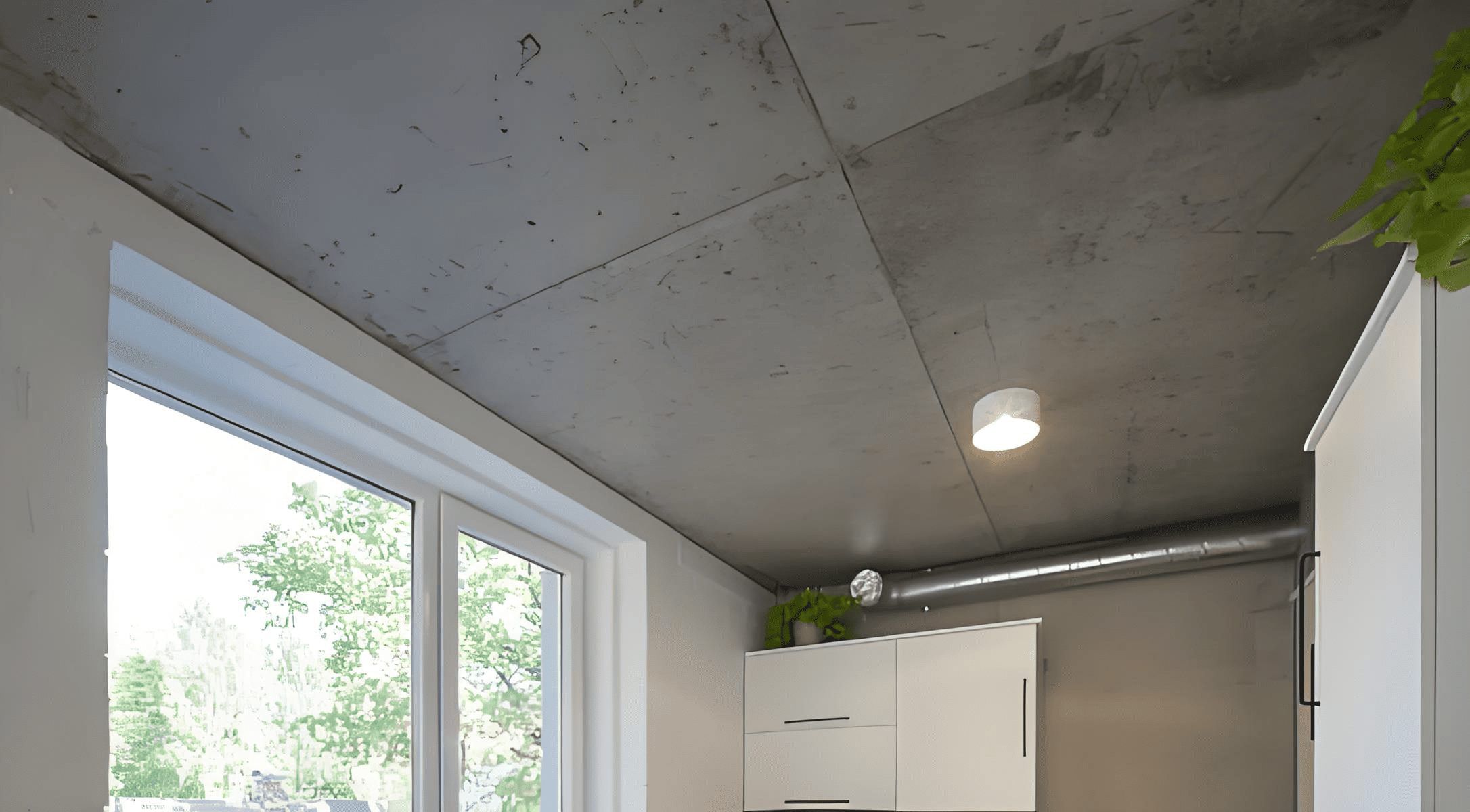
Cement board itself does not need an additional vapor barrier because its matrix structure resists moisture. However, when installed over wood subfloors or in high-humidity areas such as bathrooms, a vapor barrier or waterproof membrane underneath prevents condensation rise and long-term wood deterioration, forming an integrated moisture defense system.
Direct installation on concrete surfaces requires no vapor barrier. In wood-framed floors, a polyethylene or membrane layer helps protect wood from upward moisture. TRUSUS boards have built-in moisture resistance, but system-level protection improves floor durability and lowers maintenance costs.
Moisture Management Recommendations
Recommendations based on floor type and climate condition.
| Subfloor Type | Climate Condition | Vapor Barrier Needed | Suggested Material | Additional Notes |
|---|---|---|---|---|
| Concrete slab | Dry region | No | None | Surface drying sufficient |
| Plywood base | Humid region | Yes | 6-mil polyethylene sheet | Protect from condensation |
| Steel platform | Controlled indoor | Optional | Acrylic membrane | For vibration resistance |
| Bathroom wet zone | Tropical | Yes | Bituminous coating + cement board | Dual protection |
| Basement floor | Variable humidity | Yes | Waterproof membrane | Prevent rising damp |
Barrier decisions depend on site condition and system design.
Vapor and Temperature Interaction
How vapor barriers improve system performance.
| Environmental Factor | Effect on Flooring | Protective Action | Long-Term Outcome |
|---|---|---|---|
| Moisture migration | Warping, delamination | Blocks vapor path | Stable surface |
| Temperature fluctuation | Expansion stress | Stabilizes humidity | No movement |
| Condensation | Mold, mildew | Prevents wet contact | Enhanced hygiene |
| Water leakage risk | Surface bubbling | Secondary defense | Easier maintenance |
| Continuous load stress | Microcrack risk | Even moisture distribution | Extended lifespan |
Proper vapor management converts cement board installation into reliable lifetime systems.
Conclusion
Cement board serves as a moisture-resistant underlayment, not a primary subfloor, delivering structural stability and surface continuity under finish materials. The most durable boards feature high-density fiber reinforcement with low absorption below 10%, as in Premium products. Thin-set mortar between subfloor and cement board ensures solid contact and load transfer. Vapor barriers may be used for wood subfloors or humid environments, building a multilayer system that manages moisture, temperature, and impact resistance—establishing the durable foundation logic of modern floor structures.
