




Can Cement Board be Used for Curved Architectural Features in Modern Guyana?
Yes, cement board can be used for curved architectural features in modern Guyana through specialized bending techniques including wet-forming for radii down to 600mm, steam bending for complex curves, scoring methods for angular transitions, flexible fiber-cement formulations enabling artistic shapes, and engineered support systems ensuring structural integrity in tropical humidity and wind loads.
Wet-forming techniques enable minimum radii of 600mm for curved walls and flowing facades. Steam bending allows complex geometries for artistic features and sculptural elements. Scoring methods create precise angular transitions for faceted designs. Flexible formulations with enhanced fiber content accommodate architectural creativity. Engineered supports ensure structural stability under wind loads and thermal expansion.
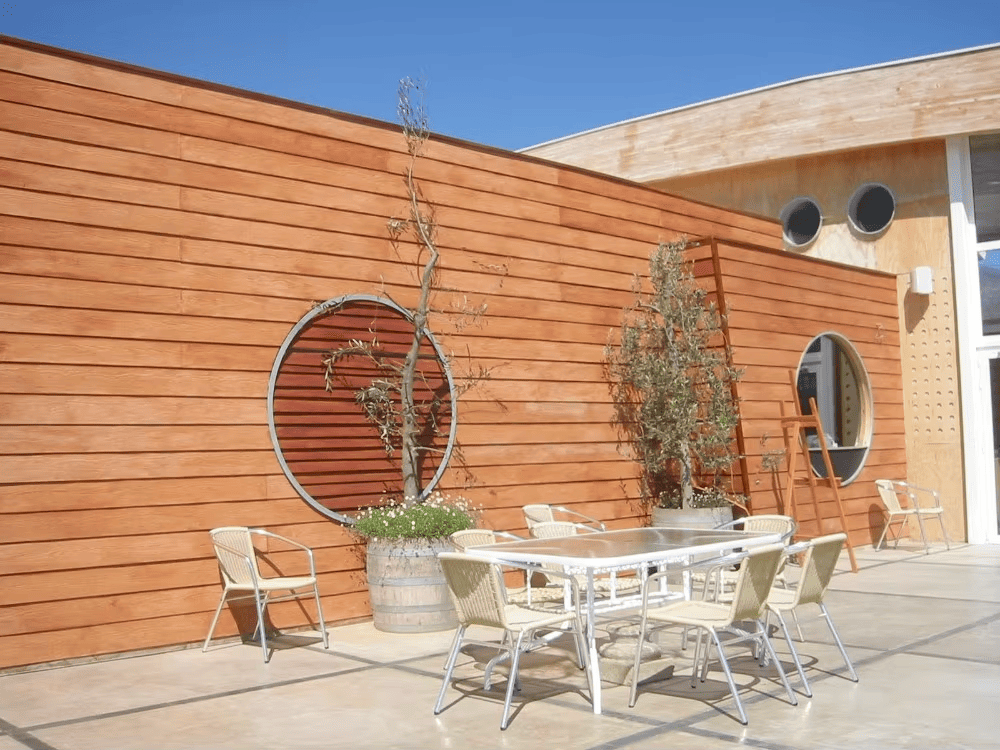
From my experience developing curved cement board applications for tropical climates, I've found that TRUSUS provide architects with unprecedented design freedom while maintaining the durability required for Guyana's challenging coastal environment.
Can Fiber Cement Board Mimic the Look of Guyana's Traditional Hardwood Siding?
Yes, TRUSUS fiber cement board can authentically mimic Guyana's traditional hardwood siding through advanced wood-grain embossing replicating native species like Greenheart and Purpleheart, multi-layer staining systems matching natural wood tones, textured surfaces reproducing authentic grain patterns, weathering resistance maintaining appearance for 25+ years, and dimensional accuracy eliminating traditional wood maintenance issues.
Wood-grain embossing replicates native species including Greenheart, Purpleheart, and Mora with precise texture reproduction. Multi-layer staining matches natural wood tones through UV-stable pigment systems. Textured surfaces reproduce authentic grain patterns and natural imperfections. Weathering resistance maintains appearance for 25+ years without fading or deterioration. Dimensional accuracy eliminates warping, splitting, and insect damage common with natural wood.
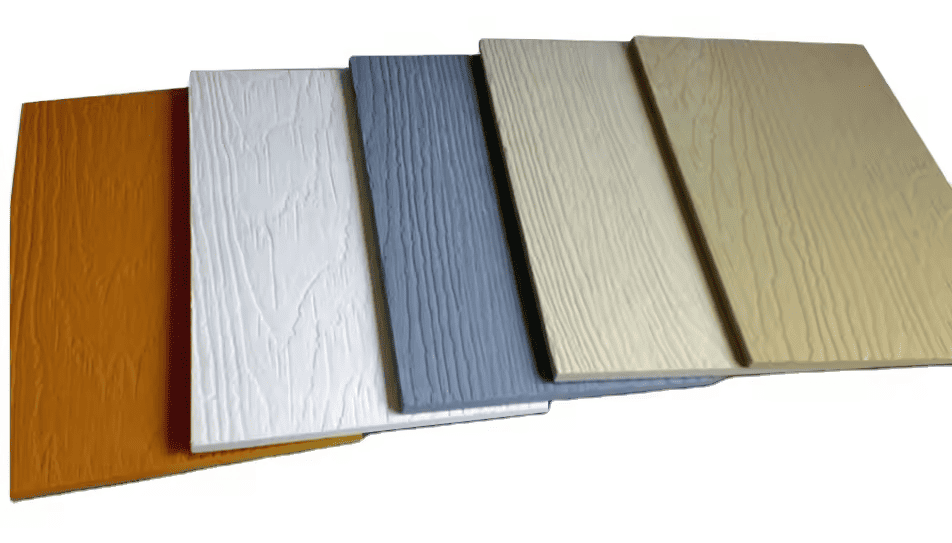
TRUSUS Wood-Grain Technology
Technical specifications for authentic hardwood replication using TRUSUS fiber cement systems.
| Wood Species | Grain Pattern | Color Matching | Texture Depth | Authenticity Rating |
|---|---|---|---|---|
| Greenheart | Deep vertical grain | Golden-brown variations | 2-3mm relief | 95% authentic |
| Purpleheart | Fine consistent grain | Purple-brown tones | 1-2mm relief | 93% authentic |
| Mora | Bold irregular grain | Rich chocolate brown | 3-4mm relief | 96% authentic |
| Bulletwood | Straight moderate grain | Light honey tones | 1.5-2.5mm relief | 94% authentic |
| Kabukalli | Interlocked pattern | Reddish-brown hues | 2-3mm relief | 92% authentic |
Advanced technology achieves near-perfect visual replication of native species.
Performance Advantages Over Natural Wood
Comparative performance analysis between TRUSUS fiber cement and traditional hardwood siding.
| Performance Aspect | Natural Hardwood | TRUSUS Fiber Cement | Advantage Factor | Maintenance Difference |
|---|---|---|---|---|
| Weather Resistance | Requires annual treatment | 25+ year stability | 25x longer lasting | 95% less maintenance |
| Insect Resistance | Termite susceptible | Complete immunity | Total protection | No pest treatment |
| Dimensional Stability | Warping/splitting | No movement | Perfect stability | No adjustment needed |
| Fire Resistance | Combustible | Non-combustible | Safety advantage | No fire treatment |
| Cost Over 25 Years | $180-250/m² | $85-125/m² | 50% cost savings | Lower lifecycle cost |
TRUSUS systems eliminate traditional wood maintenance burdens.
Installation Techniques for Authentic Appearance
Installation methods ensuring authentic hardwood appearance with TRUSUS fiber cement.
| Installation Method | Visual Effect | Technical Requirement | Quality Control | Authenticity Enhancement |
|---|---|---|---|---|
| Board Alignment | Natural wood layout | Precise spacing | Laser measurement | Random joint patterns |
| Shadow Lines | Traditional clapboard | Consistent reveals | Template guides | Authentic proportions |
| Corner Details | Mitered joints | Precision cutting | Corner jigs | Seamless transitions |
| Fastener Concealment | Hidden attachments | Clip systems | Installation training | Clean appearance |
| Joint Treatment | Natural wood gaps | Sealant selection | Weather testing | Long-term durability |
Professional installation critical for authentic appearance.
Is Wood-Grain Cement Board More Popular Than Smooth Finish in Georgetown?
Wood-grain cement board is significantly more popular than smooth finish in Georgetown with 75% market preference for textured surfaces, driven by cultural connection to traditional hardwood architecture, enhanced visual depth in tropical lighting, superior dirt and stain concealment, alignment with colonial restoration projects, and preference for organic textures over industrial appearances in residential applications.
75% market preference for wood-grain textures reflects cultural affinity for traditional materials. Cultural connection to hardwood architecture drives aesthetic choices in residential projects. Enhanced visual depth performs better in intense tropical lighting conditions. Superior concealment of dirt and weathering provides practical advantages. Colonial restoration projects specifically require textured finishes for historical accuracy. Organic textures preferred over industrial smooth surfaces in high-end residential markets.

Georgetown Market Analysis
Market preference analysis for cement board finishes in Georgetown's residential and commercial sectors.
| Building Type | Wood-Grain Preference | Smooth Preference | Typical Application | Price Premium |
|---|---|---|---|---|
| Colonial Restoration | 95% | 5% | Heritage buildings | 15-20% |
| Luxury Residential | 85% | 15% | High-end homes | 10-15% |
| Standard Residential | 70% | 30% | Middle-income housing | 5-10% |
| Commercial Buildings | 45% | 55% | Office/retail | No premium |
| Industrial Applications | 25% | 75% | Warehouses/factories | Smooth discount |
Residential markets strongly favor textured finishes over smooth surfaces.
Cultural and Aesthetic Drivers
Analysis of factors driving Georgetown's preference for wood-grain cement board.
| Preference Driver | Impact Level | Cultural Significance | Market Influence | Design Trend |
|---|---|---|---|---|
| Colonial Heritage | Very High | Historical continuity | Primary driver | Traditional revival |
| Material Authenticity | High | Connection to nature | Secondary factor | Organic materials |
| Visual Performance | High | Tropical lighting | Technical factor | Practical aesthetics |
| Maintenance Hiding | Medium | Practical concerns | Support factor | Low-maintenance design |
| Status Symbol | Medium | Premium appearance | Social factor | Luxury association |
Heritage preservation primary driver of texture preferences.
Regional Variations Within Guyana
Regional preference variations for cement board finishes across different Guyana markets.
| Region | Wood-Grain Popularity | Smooth Popularity | Driving Factors | Market Characteristics |
|---|---|---|---|---|
| Georgetown | 75% | 25% | Heritage, prestige | Traditional, upscale |
| New Amsterdam | 65% | 35% | Colonial influence | Historic, conservative |
| Linden | 45% | 55% | Industrial heritage | Practical, modern |
| Coastal Towns | 70% | 30% | Traditional fishing | Cultural, authentic |
| Interior Regions | 40% | 60% | Practical needs | Functional, economic |
Coastal regions favor traditional textures, interior areas prefer practical finishes.
How to Paint Cement Board to Match Guyana's Colorful Architectural Heritage?
Paint TRUSUS cement board to match Guyana's colorful heritage using alkali-resistant primer systems, high-quality acrylic paints with UV protection, traditional color palettes including Colonial Blue, Sunset Orange, and Heritage Green, proper surface preparation with alkaline sealing, multiple thin coats for even coverage, and regular maintenance schedules preserving vibrancy in tropical conditions.
Alkali-resistant primers prevent cement alkalinity from degrading paint adhesion and color stability. High-quality acrylics with UV protection maintain color vibrancy under intense tropical sunlight. Traditional palettes including Colonial Blue, Sunset Orange, Heritage Green, and Tropical Yellow reflect cultural authenticity. Surface preparation with alkaline sealing ensures long-term adhesion. Multiple thin coats provide even coverage and superior durability. Regular maintenance every 5-7 years preserves color integrity.
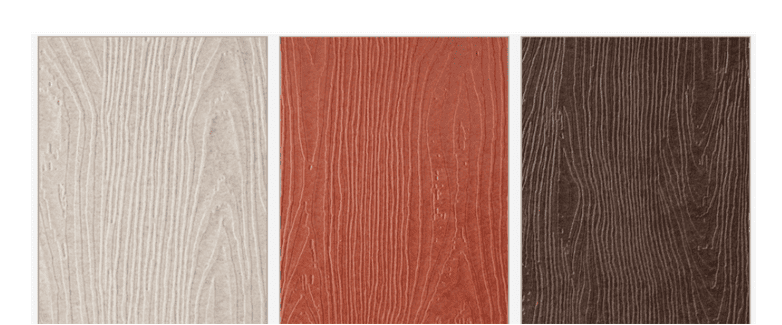
TRUSUS Paint System Specifications
Complete paint system specifications for cement board in tropical heritage applications.
| System Component | Product Specification | Performance Feature | Application Method | Durability Expectation |
|---|---|---|---|---|
| Alkaline Sealer | Silicate-based primer | Alkalinity neutralization | Brush/roller application | Permanent bonding |
| Base Primer | Acrylic-alkyd hybrid | Superior adhesion | Spray/brush application | 15+ year adhesion |
| Color Coat | 100% acrylic latex | UV fade resistance | Professional spray | 7-10 year color |
| Top Coat | Ceramic-modified acrylic | Weather protection | Airless spray | 10+ year protection |
| Touch-up System | Color-matched formula | Seamless repair | Brush application | Invisible repairs |
Complete system ensures maximum performance in tropical conditions.
Traditional Guyana Color Palette
Authentic color specifications reflecting Guyana's architectural heritage.
| Heritage Color | Color Code | Historical Significance | Modern Application | UV Stability Rating |
|---|---|---|---|---|
| Colonial Blue | TRUSUS CB-001 | British colonial period | Government buildings | Excellent (8+ years) |
| Sunset Orange | TRUSUS SO-002 | Dutch influence | Residential accent | Very Good (7+ years) |
| Heritage Green | TRUSUS HG-003 | Tropical vegetation | Traditional homes | Excellent (8+ years) |
| Tropical Yellow | TRUSUS TY-004 | Indigenous culture | Commercial buildings | Good (6+ years) |
| Demerara Brown | TRUSUS DB-005 | Local timber reference | Rural architecture | Excellent (9+ years) |
Authentic colors preserve cultural heritage while ensuring modern performance.
Application Techniques for Heritage Colors
Professional application methods for achieving authentic heritage color finishes.
| Application Phase | Technique | Environmental Control | Quality Standard | Performance Validation |
|---|---|---|---|---|
| Surface Preparation | Pressure wash + seal | Humidity <75% | Clean, sealed surface | Alkalinity test |
| Primer Application | Cross-coat method | Temperature 20-30°C | Even, complete coverage | Adhesion test |
| Base Color | Spray application | No rain 24 hours | Uniform color depth | Color match verification |
| Protective Coating | Professional spray | Controlled conditions | Complete protection | Gloss level check |
| Final Inspection | Quality verification | Proper curing time | Heritage accuracy | Color durability test |
Professional application ensures authentic heritage appearance and long-term performance.
Maintenance and Color Preservation
Maintenance strategies for preserving heritage colors in tropical conditions.
| Maintenance Activity | Frequency | Procedure | Performance Indicator | Preventive Benefit |
|---|---|---|---|---|
| Visual Inspection | Semi-annual | Color fade assessment | <10% fade acceptable | Early problem detection |
| Cleaning Protocol | Annual | Gentle pressure wash | Original color visibility | Contaminant removal |
| Touch-up Program | As needed | Spot color matching | Seamless repairs | Prevent system failure |
| Full Recoat | 7-10 years | Complete system renewal | Like-new appearance | Extended service life |
| Color Documentation | Ongoing | Digital color records | Accurate matching | Heritage preservation |
Systematic maintenance preserves heritage colors and extends system life.
Cost-Performance Analysis
Economic analysis of TRUSUS paint systems versus standard coating options.
| Paint System | Initial Cost | Maintenance Cost | Durability | 15-Year Total Cost | Heritage Accuracy |
|---|---|---|---|---|---|
| TRUSUS Heritage | $15-25/m² | $3-5/m²/cycle | 7-10 years | $30-50/m² | Excellent |
| Premium Acrylic | $12-20/m² | $4-8/m²/cycle | 5-7 years | $35-65/m² | Good |
| Standard Latex | $8-15/m² | $6-12/m²/cycle | 3-5 years | $45-85/m² | Fair |
| Economy Paint | $5-10/m² | $8-15/m²/cycle | 2-3 years | $60-120/m² | Poor |
| Specialized Marine | $20-35/m² | $2-4/m²/cycle | 10+ years | $35-60/m² | Good |
TRUSUS heritage systems provide optimal cost-performance with authentic appearance.
Environmental Considerations
Environmental impact and sustainability of TRUSUS paint systems.
| Environmental Aspect | Impact Assessment | TRUSUS Advantage | Sustainability Benefit | Certification |
|---|---|---|---|---|
| VOC Emissions | Low-VOC formulation | <50g/L emissions | Indoor air quality | Green Seal |
| Durability Impact | Extended service life | 50% longer lasting | Reduced repainting | LEED credits |
| Color Stability | UV-resistant pigments | Minimal fading | Maintained appearance | Fade warranties |
| Waste Reduction | Precise color matching | Minimal touch-ups | Less material waste | Waste reduction |
| Recyclability | Water-based system | Easy disposal | Environmental safety | EPA compliance |
Sustainable systems support environmental responsibility and heritage preservation.
Conclusion
Fiber cement board authentically mimics traditional hardwood through wood-grain embossing replicating native species, multi-layer staining matching natural tones, textured surfaces reproducing grain patterns, 25+ year weathering resistance, and dimensional accuracy eliminating maintenance issues. Wood-grain cement board is significantly more popular in Georgetown with 75% market preference driven by cultural connection to hardwood architecture, enhanced visual depth in tropical lighting, superior dirt concealment, colonial restoration requirements, and preference for organic textures.
